Calling for Easy Garden Food: Collard Greens Anyone?

Essay #1 in a series called “SoFla Gardening”
The Why

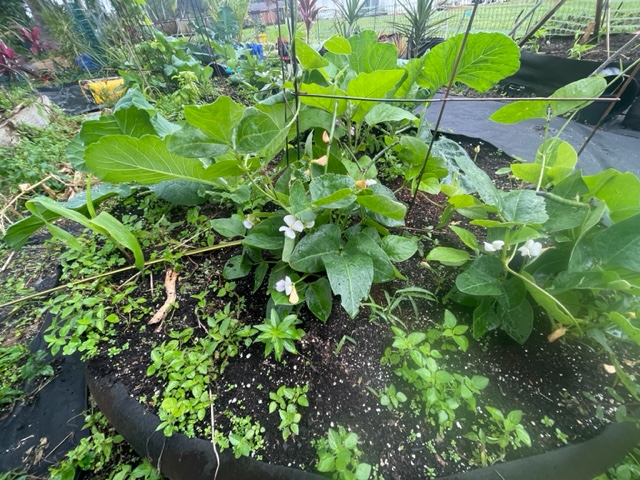
In my quest as a south Floridian gardener and aspiring mini-farmer, I’ve been trying to figure out what types of edible plants I can grow and harvest in the 1 acre of what our late Granddad Bill Bean called “God’s great acre” of land.

Managing a busy family can be a deterrent to growing a garden but knowing that the general theory of photosynthesis applies to assist, I wanted to go beyond just growing herbs to find an easy food that we could harvest from our south Florida garden without too much *trouble.  *By the way, “trouble” is defined as numerous pest and climate issues in my interpretation.

The What

If you’re reading this and you’re a parent or guardian, I don’t need to remind you that one of the many stresses we endure beyond what our children take in mentally is what they actually ingest as food in their body for the fuel which helps their body grow and hopefully flourish for the rest of their lives.

Turns out that as convenient as store-bought foods have become, there has been a lack of nutritional value in those offerings—especially when it comes to our kids getting their vegetables, namely greens. Recent inflation rates in groceries have made purchasing fresh produce more expensive than many families can handle—also, even if you could afford to buy lots of raw vegetables and fruits, their respective nutritional value decreases greatly from the moment they are harvested (many times before ripening) and so lose their potentency to impart what our bodies need from them:

Beyond that, there is also recent mounting evidence that how our produce is grown can affect the nutritional values, putting emphasis on regenerative growing practices that are more pragmatic and possible for smaller farms, homesteads or your garden bed:

https://www.nationalgeographic.co.uk/environment-and-conservation/2022/05/fruits-and-vegetables-are-less-nutritious-than-they-used-to-be

You can do your own research but hopefully it’s become collective knowledge that a diet consisting of daily greens is important to ensure that our bodies are receiving the proper levels of vitamins A, C, K, and folate, calcium, magnesium and fiber among other things.  These blends help to incorporate the other foods we eat to contribute to an overall healthy biome in our guts as recent medical research shows helps us to have a strong immune system overall.

The How
Forgive the redundancy for those who have followed my online articles before but I’m not ashamed to share a few of my favorite seed resources with you.  While you can purchase seeds at big stores like Lowe’s and Home Depot, I don’t recommend doing that as it’s not always the right fit for your growing region and many times the seed stock is limited. Also, consider any local nurseries in your area as they may stock the appropriate plants destined to thrive in your respective area.

I trend toward small business outfits and those suppliers that have a good heirloom stock, these are my top favorites:

Johnny’s Seeds:

www.johnnyseeds.com

Baker’s Creek Heirloom:

www.rareseeds.com

Pinetree Garden Seeds:

www.superseeds.com

The Good Eats

I was traveling in Savannah, Georgia several years ago when I had a dish called “Lemon Collard Greens” and I was overwhelmed with the flavor explosion and simultaneous realization that I was eating something that was also nutritiously good for me. I’d had collard greens before but they were usually mushy and bitter, like the side dish option available at Cracker Barrel.

As I began my personal research on what I could attempt to grow here in the sub-tropical latitudes, “collard greens” came up as a top contender so I started to literally sow the seeds.  Given my palate memory I figured that I could whip up that Georgia dish somehow if I had the produce in hand.

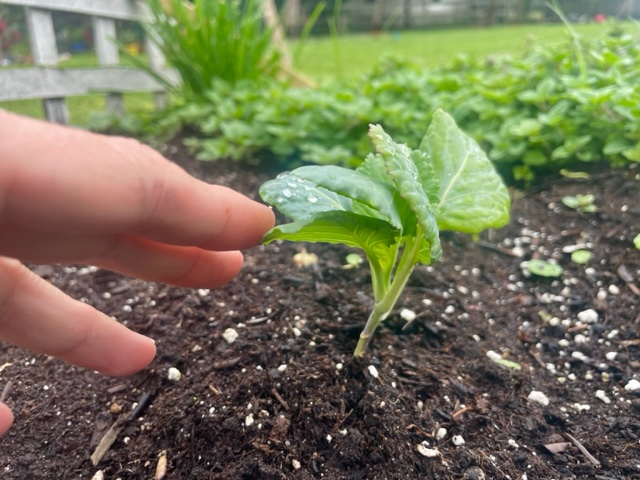
In south Florida, you can cut the germination labels of seed packets by at least 2-3 days because of the consistent heat and humidity levels.  However, that doesn’t mean that one isn’t impatient once the seeds are in the soil and several cycles of sun and waterings have occurred.  After the seed initially sprouts, I had to stop myself from trying to pinch off the early leaves when they got to about an inch long—little did I know the first time I was growing them that they could get to lengths of at least 12 inches!
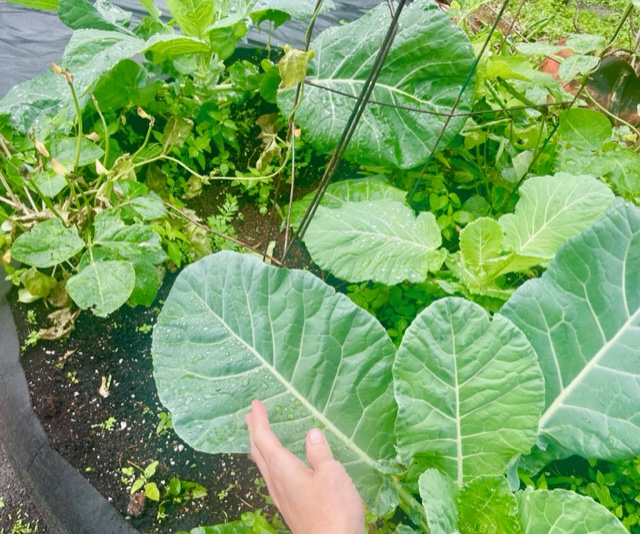
Thankfully, after about a week there are seedlings emerging and starting as soon as 3-4 weeks later you can start to snip off leaves from the collards to munch on raw or consider sautéing. It may start as a simple garnish and once the leaves really come in, you’ll find yourself 

Cooking the Harvest

You can “google”,  “duck go go” , or utilize whatever your search engine tendency is to find different recipes. You can also hit your local library for a physical book or even a used book store to find the old tomes that house recipes for something like this: Collard Greens with Lemon.

In my personal experience, I did both forms of research—I pulled a few recipes online and checked some physical books.  I can recommend the following online ones if you’ve never made collard greens with lemon:

https://www.marthastewart.com/313373/collard-greens-with-lemon

I will also share with you a simple recipe I’ve compiled after trying several from both recipe books and online that accomplishes the flavor I was introduced to years ago in southeast Georgia:

Mama Mona’s Lemony Collards

  • Bunch of fresh collards (5-10 big leaves)
  • 1-2 cloves of garlic depending on your taste for it
  • Lemon
  • Butter (preferably good stuff like Kerry Gold or cultured butter)
  • Olive Oil
  • Salt and Pepper
  • Optional: broth, vegetable or chicken or beef
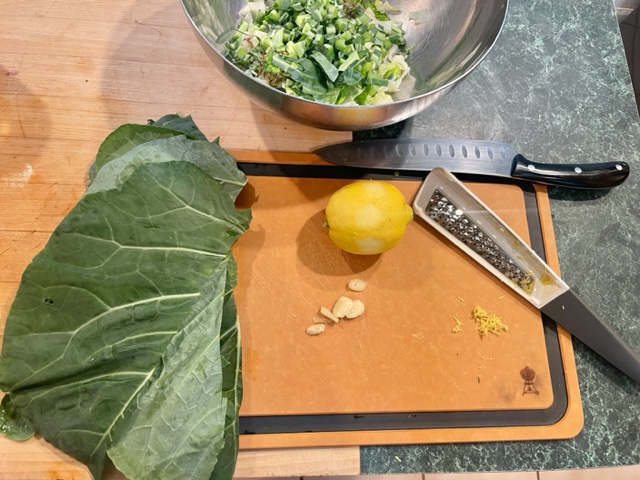
Prepare the greens by washing, drying with a towel/paper, then remove the middle ribs with a knife. After that, roll the greens tight and slice in thin strips. 
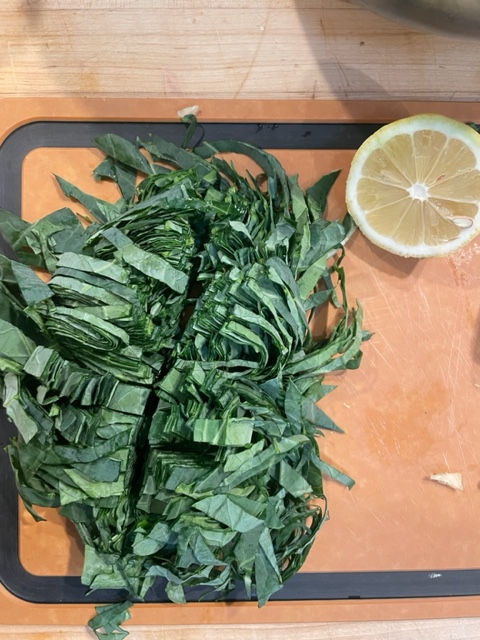
Prepare garlic either by mincing or slicing and dicing into small pieces—again, up to your preference. Grate the lemon for at least 1 – 2 teaspoons of lemon zest.

Take your favorite saucepan and put 1-2 teaspoons of butter and a drizzle of olive oil in and heat up.Once a drop of water sizzles, the pot is ready to recieve the garlic.Being careful not to burn the garlic, saute for about 1-2 minutes before adding the collard greens along with lemon zest and some salt and pepper to taste.
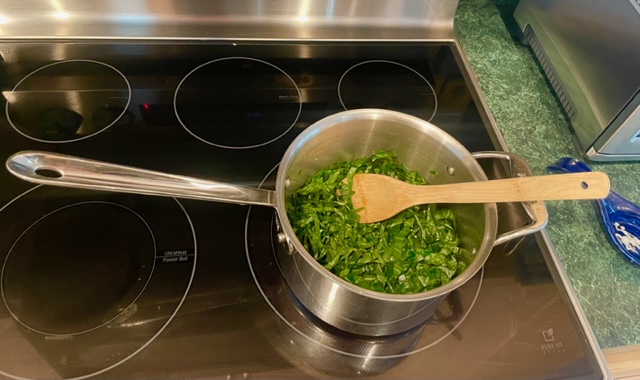
It usually takes about 4-7 minutes to wilt the collards and you want to take it off the heat when it’s a bright green. As many recipes will advise, you want to avoid overcooking it to where the color would become a discolored green as it will emit a bitter smell and have an unpleasant taste.

Once you remove it from the heat, you can add some broth and bring back to the stovetop for a quick boil. If you skip broth then you can just squeeze fresh lemon juice on top and serve–enjoy!
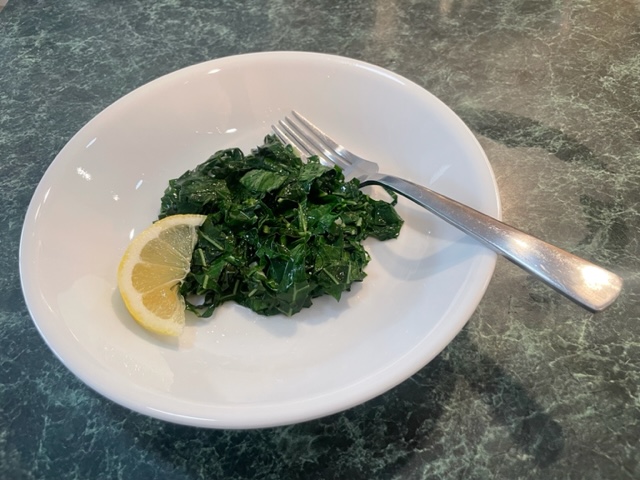
The After Harvest and Feast Glow

I hope to continue sharing home garden-to-kitchen tidbits as there is nothing quite like the satisfaction one feels after toiling over supervised growth of and edible plant followed by harvesting and cooking it up in your home or sharing with others.

For those growing things in south Florida, I can report that collards are low maintenance and thrive despite surrounding weeds or insect pests. If sowing directly, consider starting the seeds in late September or October in order to enjoy eating your collard greens in late December, early January.

Happy Planting,

R.V.S.B.

Additional Collard Greens Research:

UF-IFAS-Extension resource:

https://edis.ifas.ufl.edu/publication/MV053

Florida Education in the Classroom:

https://www.britannica.com/plant/collard

The What: Food and Money – The Tango Tangle

THE WHAT: FOOD AND MONEY  – THE TANGO TANGLE

My heart pinched inside my chest as I listened to the cashier’s announcement of the total price of my Publix grocery purchases.  “Absurd amount of money!” is the first reaction internally followed by a justification speech by the concerned mother/caretaker in me that knows it’s better to spend money on good food for my family even if it tightens the household budget in other areas.  This scenario repeats itself and the outcome is the same at least for me: I choose quality of food over cheapness and quantity any day.  What are the economic and environmental factors that any of us face today when making our food choices on a daily basis?

THE WHO

The perspective on who we’re buying food for obviously affects our choices.  Whether you’re single, married, living with roommates, with children, with elderly—all these groupings carry their respective needs, wants and overall themes.  Personally I can attest to the interesting blend of tastes I accommodate in my cooking and choosing of groceries as I have a husband, two boys under 4 years old (one an infant) and two octogenarians.  When I look around at many of my colleagues with children, it seems a majority of parents today are very sensitive to the question as to whether the produce they purchase is organic or not.  It turns out that there are some produce items that are more critical to buy organic like spinach and berries because of how porous the skin is and therefore easily absorbs pesticides.  Some websites you may find helpful for resource information:   www.organicconsumers.org , www.organic-center.org , www.non-gmoreport.com , www.healthychild.org , www.texasgrassfedbeef.com , www.centerforfoodsafety.org , www.chemicalfreekids.com , www.foodnavigator.com

THE WHY

Organic, non-genetically modified and local are some of the current buzz food words.  The term organic always makes me chuckle for a nanosecond as there’s hundreds of years of human evolution coursing through my blood that reminds me all food was once “organic” without the labeling.  It’s just that in the last century or so that our civilized societies started to meddle beyond what hybrid practices were in place already in agriculture.  It is interesting to note that recently many farmers are returning to using more natural methods in their crop and livestock management—part of it could be the increased consumer demand for organic products and another part may be that it has been found more cost-effective to use better sustainability practices on the environment when cultivating the Earth or animal stocks.  Again, my own battle is complicated when it comes to whether I buy organic, conventional or local food products.  I prefer organic but it’s not always available or cost-effective.  Local produce is desirable because I like supporting the farmers in Florida and it’s fresher with less gas emissions spent on its transport to my kitchen.  At the same time, a pint of blueberries from Peru may be farmed with the best ecological-friendly practices and taste better than the pesticide-laden ones from a few counties away.  Here are a few more resources that may be helpful:  www.farmigo.com , www.localharvest.org , www.slowfoodusa.org , http://foodnews.org/ , www.foodnavigator.com , www.environmentalhealthnews.org , www.biointegrity.org , www.localfoodswheel.com , www.greenling.com

THE WHEN

Sometimes I wish I were ignorant and just went to the store and was able to buy the cheapest of everything to feed my household.  The truth is irreversible once attained; I know what is best for my family’s situation and it happens to be a diet that contains the freshest fruit, vegetables, dairy, legumes, meats and then on to the grains, pastas and et cetera.  Making the conscious choice to use less canned products and other foods that contain more harmful ingredients in process/preservation means that our grocery bill is higher than it would be if I blindly chose based solely on cheap economics.  Not everyone thinks through what they buy when at the grocery store but it’s only a matter of time when many if not most of us will realize that how we eat is like a form of preventative medicine for our bodies.  The cost you may incur now can serve to defray future medical costs after years of eating products that can slowly sabotage your body’s ability to fight off infection and other illnesses.   Then there’s the question of the effect on our environment by our agricultural practices and that factors into many people’s choices of food economics.  Social impact in the form of “fair trade” practices is yet another factor weaving into our ethos as consumers of groceries for ourselves.  Some more websites for your personal research:  www.fairtradeusa.org , www.greenamerica.org , www.fairtraderesource.org , www.kidsorganics.com , www.rodaleinstitute.org , www.opensecrets.org , www.allergykids.com  , www.usda.gov , www.fda.gov

This blog post is woefully inadequate in addressing all the various facets involved in the economic and social challenge we face in our food purchases as the commodity prices continue to rise on a monthly basis.  I hope it at least helps in starting a conversation or a journey for information as this is an issue that will continue to grow in importance as we face upcoming agricultural changes and trade practices that can affect both the quality and quantity of our food in America particularly.

RVSB


WHY BOTHER? FOOD AND RELIGON FOR THOUGHT

WHY BOTHER? FOOD AND RELIGON FOR THOUGHT

As I wrestled last week with my very hyper older son while trying to hold on to my squirming infant son in our Greek Orthodox church pew during worship service, I thought: Why bother? The same question pops into my mind when in the middle of a grocery aisle with two restless little souls while trying to decide which dry food good is healthier for my family’s pantry. It seems there are a couple items I’m quite passionate about when raising our children, one rooted in spiritual sustenance for their souls and the other being physical fuel for their bodies. I’m guessing that I’m not the only mom out there in any given country that feels the same way.

WHAT’S IT ALL FOR? Sense of Incense and Icons

So back to last week: As I chased the rabbit in my mind who was screaming “why bother?”, I reminded myself to look around and remember why I do bother, along with my husband, to go through our weekly ritual of attending our Greek Orthodox church. I cannot speak for other faiths such as Jews, Muslim, Hinduism, et cetera—but in my faith, besides the obvious theological tie to the miraculous belief of the Trinity and Christ’s Resurrection…I appreciate the hope of things to come and that while we’re going through the rumble-tumble ride that life can be, we can find ways to help and love each other. There are so many things about our world and the creation beyond our atmosphere that I don’t know that I’m in awe of the God force behind it all and I’m grateful for the chance to live and participate. If I can share this with my children in a way that inspires them to embrace life, love and respect for others then I will be at peace at the end of my journey here. This can be a tough philosophy to re-enact when dealing with a temper tantrum or a tired-tot meltdown, however, I encourage perseverance if not to help you remember what’s important to your belief system in your practicing faith. My husband and I do agree that ultimately if our hearts are not in it, then it does our children no good and it would be a moot point for us to attend church if we are only bitter shells of ourselves in the congregation.

FOOD IS FOOD, RIGHT? Discerning What’s Best

The ridiculous part about this food subject is that many of in the “civilized” world have way too many choices. It’s sort of like how women hundreds of years ago didn’t have so many choices when it came to family planning but now are sort of paralyzed sometimes in whether or not to have children. When it comes to planning our family’s menu day to day, I make countless choices in the lead up to the final product that arrives on the table for the main meals and snack times. For my own crazy methodology, I like to seek out organic and locally fresh ingredients when possible. Organic and even local can mean very high prices: in those instances I may purchase conventional or just skip that type of meal until later. It helps to educate one’s self on the foods you and your family prefer to eat so as to know if you want to make a concession or not. But don’t peg me for a purist, either. I often tell family and friends that in the end there’s a reason I give thanks and pray before every meal, especially when eating out at a restaurant: I can’t control every single ingredient sometimes and as we’re finding out in recent news, I may unknowingly purchase something under a false label or omission of vital information (Google search the recent news on meat labeling for items such as poultry and pork-evidently many of those meats are injected with solutions like water, broth and other things to plump them up and they’re not currently mandated to be labeled as such). Let’s not forget-for some of us, fixing food is our way of loving our family and friends, so it’s worth the hassle even with the “bewitching hour” for parents (I highly recommend Crockpots!)

FOOD AND RELIGION, IS THAT ALL? The Countless Other Things

As a lover, mother, daughter, sister, friend and wife that I am these days, there are many other things that I strive each day to share and instill in my children. I know that I’m not perfect and many times can be hypocritical in my beliefs—sometimes even changing my views on what I thought was my solid opinion beforehand. What’s most important must be how we love each other and when it comes to our children that’s truly what they need the most is our unconditional love, all the rest of the countless other things we try to give/share with them are just the details of life that make us all unique.

RVSB