The Case For and Against Keeping the Department of Education: from a Florida Homeschooling Parent’s Perspective

The Case For and Against Keeping the Department of Education: from a Florida Homeschooling Parent

November 20, 2024
Formulas written on a blackboard

The Why: Why Write This Short Blog Post as CEO of the Bean Home?

President-Elect Donald J. Trump has nominated Linda McMahon to be the next Secretary of Education pending Senate approval.  I have some thoughts to share in the case for and against keeping the Department of Education as an operational entity in Washington, D.C.  My hope is to help infuse some ideas and calm anxieties regarding the possibility of losing the department entirely. This humble article aims to touch on just the peripheral details I can offer from my life experience in education.

Note: For those especially alarmed by the idea of change, the Department of Education in its current form only started with congressional action in 1979 and its first inception in 1867 its “main purpose was to collect information and statistics about the nation’s schools”— more on its history can be found at www.ed.govhttps://www.ed.gov/about/ed-overview/an-overview-of-the-us-department-of-education–pg-1

Author’s Background

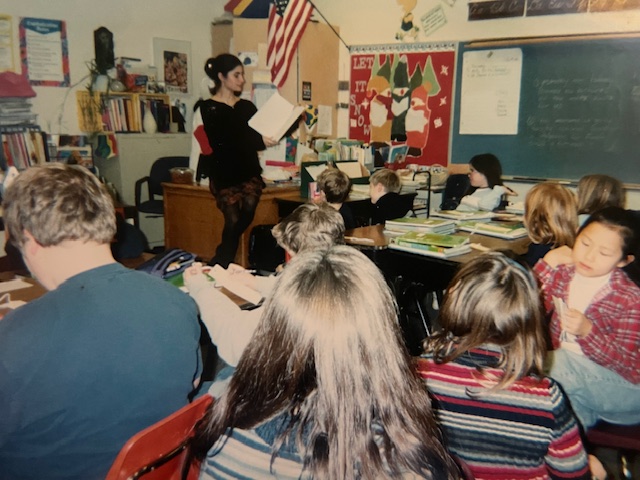
My connection with the U.S. Department of Education began in the late 1990s when I participated in a federally funded program called “America Reads” which was aimed at helping literacy in schools during the Clinton Administration.  At the University of Florida, I was trained and subsequently worked as an undergraduate student helping elementary students who were struggling with their reading skills. This positive experience encouraged me to pursue an initial path of training to become an educator in our public schools.  

My first experience came during 2000 when I worked at Bannockburn School, a public K – 8 institution in a Chicago suburb in Illinois.  I was tasked with assisting the teachers in both 2nd and 3rd grades there and teaching a group of students between the grade levels.  That season of educating students taught me so much as the teachers I worked with had already logged over 25 years of teaching and shared all their wisdom with me.  I also learned first-hand how federal policies and administrative mandates were making their job difficult and separating them from the joy of teaching their students.
When September 11, 2001 occurred, I joined many of my generation in a call to national service of some sort: for my husband and I that entailed going to Washington, D.C. and working for our U.S. government.  I was able to land a job working for my home congressional district and congressman from Florida and later would swear an oath to the Constitution and serve as political appointee at the U.S. Treasury Department in the George W. Bush Administration.  

In both roles I interfaced with the U.S. Department of Education—especially when helping my congressional member with appropriation bills and trying to figure out what and why our Florida constituents were dependent on this department for federal funds. No Child Left Behind was a bipartisan bill that was written, passed and heralded as the triumphant answer to help students in our nation do better in their assessments related to their grade levels. Its anticipated success would not be realized in coming years.  The same fate would follow when Common Core Standards were initiated in later years: parents revolted with the math standards and students increasing suffered test anxiety.

Although I had a few friends who worked at the U.S. Department during the G.W. Bush Administration years, I began to doubt its relevancy as I received meetings with educators and school administrators from Florida that were finding the federal overreach to be extreme and unhelpful.  Perhaps we should have tried to address the cracks in the foundation we saw as “worker bees” back in those years, but collectively we trusted those in charge.

Transition: Post-Government, Post-Graduate Education, Homeschooling Mom

As I transitioned from government service in Washington, D.C toward starting a family, I began a Masters of Education degree work at Marymount University in 2007 that was put on hold until a later date in 2018 when I returned to University of Florida to pursue and ultimately graduate in late 2020 with a Masters in Business Administration.  

My time at Marymount University gave me the opportunity to learn with Dr. Raja T. Nasr who impressed on me the history of public education and the possibilities that lay for education in general in our nation.  It was during that season that I decided with my husband that I’d like to pursue an alternate route with our children, the first one born in summer of 2008.  My goal as I embarked on the path of being a self-made homeschool “Ms. Frizzle” (think Magic Schoolbus book series) was that our children would enjoy learning and “socialization” was of top concern.

In fact, the first question I got from people inquiring about where our kids went to school was, “What about socialization?”  The irony of this question would reveal itself over the years as we limited any screen time for our children and instead made interaction with people paramount in every facet of their daily lives: from grocery store visits, sitting at a family dinner table, at meal times in outside environments like restaurants, hybrid education options like museum or library classes, online classical academy and the list goes on.  Basically, as we as a society pivot to the dramatic changes in our world, the same is true when managing a homeschool-centric education system.  Consider this: AI is learning faster than we realize, in kind, our thoughts on how to educate our students must be ever-flexible and nonstop vigilant. 

Over the years, I’ve stayed in touch with our local public school system through the Home Education Office in Palm Beach County.  As one of our children is fast approaching graduation from the K -12 education paradigm, I’m grateful for all the assistance and guidance from friends and colleagues alike who have served our nation as educators and workers in our school systems nationwide. 

What I’ve noticed repeatedly, however, is that while the U.S. Department of Education in its current form may have a beneficial effect on our nation’s overall conversation about critical things like literacy and access to education for all children, there is another side that drags in a negative direction with things like excess of taxpayers’ dollars at work for divisive programming that’s better left to individual state control and oversight.  The financial glut of the federal government agencies includes even the noblest intentions like education of our nation’s next generation.

Can We Reach a Conclusion?

As I write this, my personal calling as a wife, mother and educator tugs at me to conclude this piece by reiterating that I always hold hope for our nation.  Regardless of who is in our Executive Branch in the United States, the question of the effectiveness of the federal Department of Education is a valid one and deserves constant attention during any presidential administration.

As for getting rid of it? It could be downsized at first and rebranded to assist each state and their education heads to accomplish their respective goals.  The civil servant staff at Department of Education could be transformed and transferred to serve other educational purposes more effective than just running through statistics and creating new federally-funded programs.  Again, the reality of AI programming replacing people at desks deserves recognition even though most of the public is not dealing with this irreversible reality.

Keep it at all cost? Perhaps compromise again is available on this side of the argument. Again, I believe there is a compromise found in the details—is downsizing practical with the end goal of phasing out dependence on federal funds through the Department of Education?   This is a debate that can have no end but I have hope that all sides can agree that it is worthy of attention and working out for the better of our nation’s future as we advance alongside our technological wonders like artificial intelligence while trying to maintain and enrich our own as humans.

R.V.S.Bean
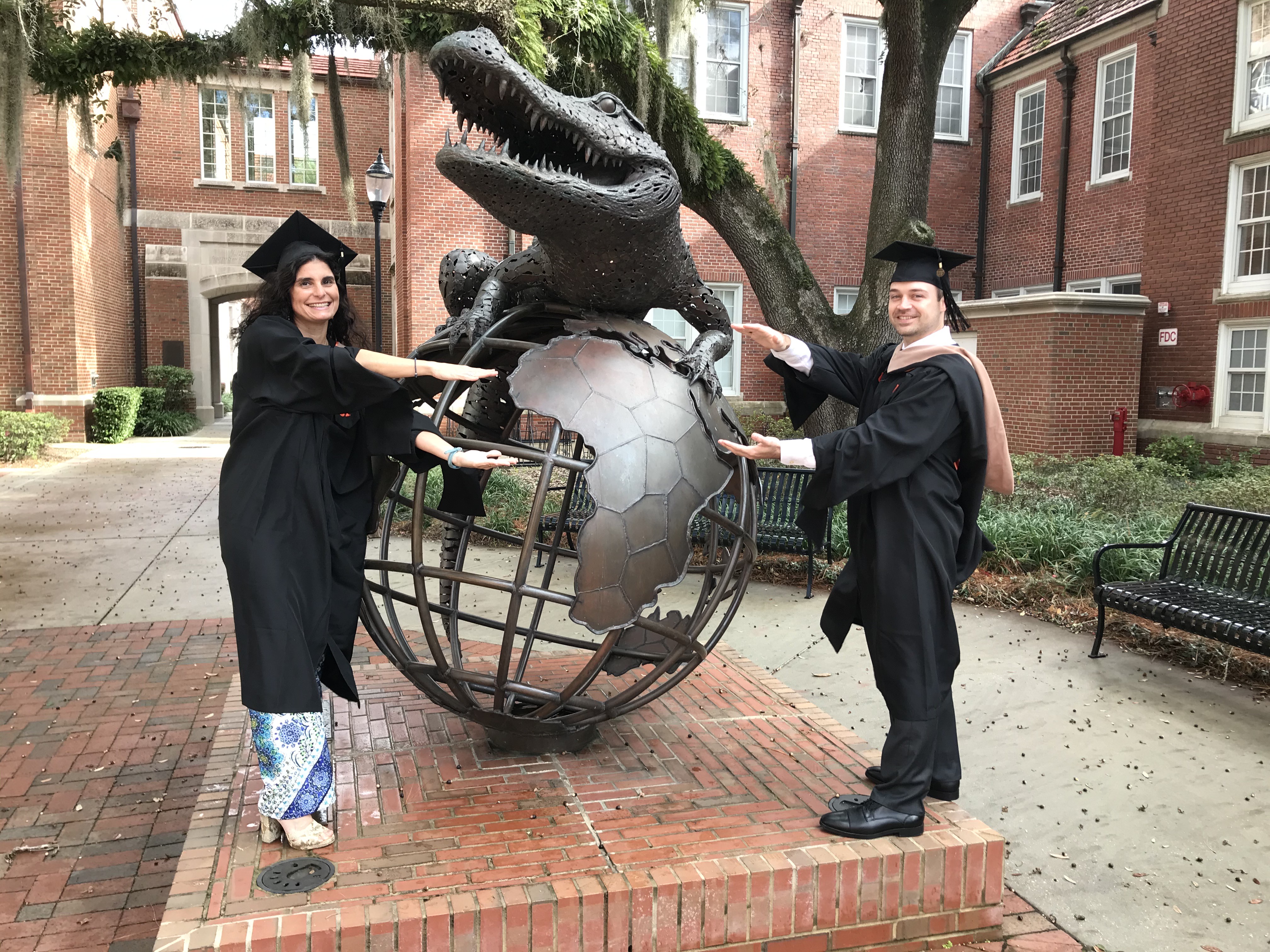
MBA Graduation with fellow colleague, December 2020

Living the Loving Life: Hindsight of Helping Hospice at Home 

February 14, 2024

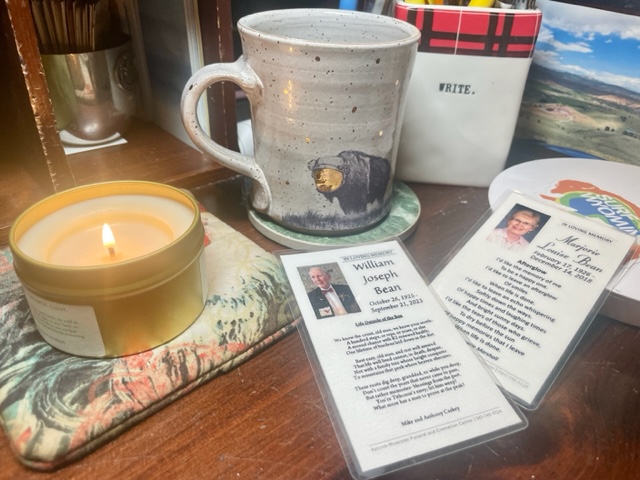
Note: This is a personal mini-essay reflecting on the bittersweet experience of sharing in the hospice care at home for a loved one who passed away on September 21, 2023. +

The Spark is Sputtering, Now What?

It was about this time last year that we noticed the differences in Granddad Bill Bean’s daily routine.  He was getting more out of breath than usual during his walks and he was eating less at the dinner table.  Increasingly he was experiencing various awkward incidents ranging from mental slip-ups to physical shortcomings.  

After living with this man since 2009, I began to sense his needs were outpacing his desire to accept help and that’s usually when reinforcements are needed in a caregiving home such as ours had become over the years.  As I grappled with the reality of the present, my mind invariably rolled backwards in reflection and nostalgic amazement.

Big, Bright and Bold Always

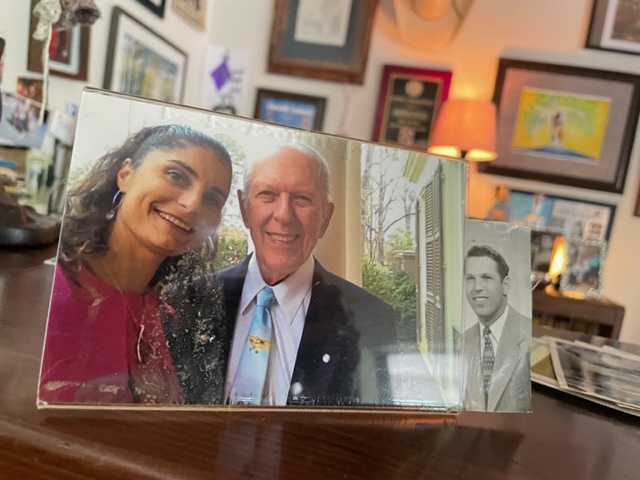
“Welcome to the good ship lollipop!” said Dr. Bean to me the first time I met him at his home here in Palm Beach Gardens, Florida in late 1997.  I was on holiday break from the University of Florida and had just started dating his grandson, Thomas Alexander Bean—this was my introduction to “Granddad” of whom I’d already heard about in conversations with Thomas.

Little did we both know that one day we’d be living under his roof with his wife and helping Granddad care for her until she passed away after a long battle with dementia in 2018. How could I fathom as a 19-year-old college student that in that over a decade he would be instrumental in helping raise a few of his great-grandchildren, setting the table for daily meals we’d crank out and his sharing holidays along with his family, friends and with my side of the family?

I cannot properly encapsulate in this piece all that Dr. William Joseph Bean was in his lifetime, a member of the “greatest generation”, WWII era person he was—his obituary barely scratches the surface: https://www.dignitymemorial.com/obituaries/jupiter-fl/william-bean-11470118 By the time I met him he was barreling into his golden years in his early 70s with no signs of slowing down as an active Rotarian and still flying his own plane to visit family and friends.

What I can memorialize here is that Granddad Bean took every day in bold color, as if everything around him was a black and white movie reel and he had a bucket full of thousands of color hues varying in their intensity.  He hurled those colors and sharpened their focus on the people he engaged with in all facets of his life: a trinity life scope of God, family and country. 

I was enchanted immediately with his energy and love for others no matter how different they were from his personal sensibilities. Having never really known my own respective Greek grandfathers, Granddad Bill became the grandfather-in-love of my lifetime.

Tunnel Vision of Declining Health 

Reminiscing on the “good old days” afflicts us all and usually is a coping mechanism to help soothe us when the current situation isn’t favorable.  As Granddad’s health began to deteoriate, the communications with his children became longer in length and depth while more frequent as well.  This was early 2022 and we’d been so grateful to have survived the “Covid-19 pandemic” years that our hearts weren’t prepared for the rapid decline to come in the months ahead.

This was also the 3rd year that I would be leaving in the early summer months to go work out west with my three children in tow.  Knowing that my husband’s parents would stay at the house while we were gone and that various family members would cycle in and out of the house helped me pack our things to head out to my work commitment.  The children and I stayed in touch and sent Granddad frequent letters and postcards.  Still, the shock was devastating when I learned that after the first few weeks of our absence that he dropped in his daily weight some 15 pounds or more.

At 97-years-old Granddad was not a typical nonagenarian, he was convinced that he was going to make it to 100 years old and perhaps beyond given his track record of vibrancy despite the odds.  But as his body began to fail him in small ways they began to snowball in big ways.  

It was Granddad himself who concluded that he should have a night nurse assistant so that he wouldn’t repeat falling on the floor and being stuck there until someone came into the house in the morning. This was a huge and humbling step for a fiercely independent man that once gave me a dirty look when I tried to help him physically when I was fresh out of college in the early aughts.

A Final Hurrah: Kaden-Bean Reunion Where It All Began

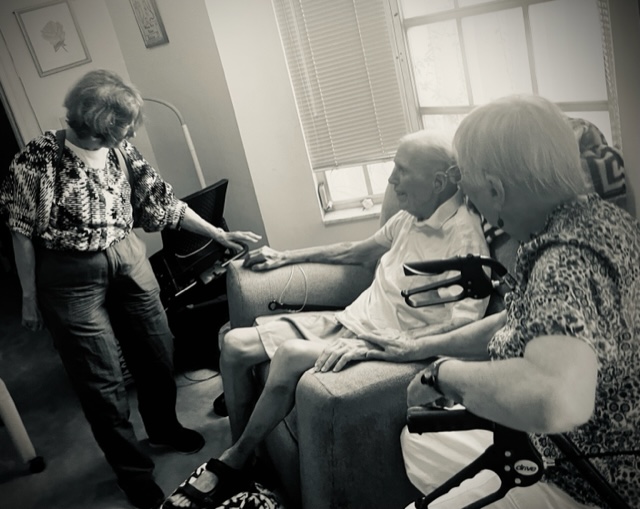
It turns out that having us host the Bean-Kaden reunion last June was fortuitous and allowed many in the family branches to come and be with Granddad Bill while he was still lucid as his body was failing him.  I flew back with the kids for a week to be with everyone, I spent nearly every night in his room along with the night help as I wasn’t sure if we’d see him again on this Earth when went back west.

There is something so beautiful about witnessing all the different people that Granddad had been involved with in his life come and visit him. This included friends, colleagues, church folk and others along with his family lines that crisscrossed his and his wife’s bloodlines.  His mother was Jewish, his father Christian and there’s at least one grandchild who is Muslim—right there a few of the major religious affiliations are represented in his love for his family and then beyond.

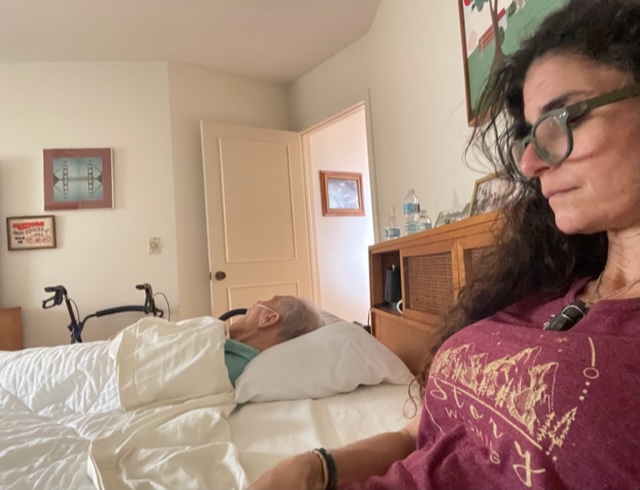
What truly shocked me, however, was how much Granddad Bill was taking in even as he was physically struggling.  For instance, the night before I was due to take a flight from Fort Lauderdale to Denver he awoke next to me and looked over and said, “You’re leaving today aren’t you?” My groggy senses at just after 3am had me thinking I was dreaming but we began to talk for over an hour as the night nurse slept in the chair opposite us. I still marvel at how clear his senses and words were as he spoke with me before he fell asleep again.

I wouldn’t take it back now but I did have the children give their “final” goodbyes as we left the house that morning in case he wasn’t here when we returned later in the summer.  It nearly destroyed me to listen to my oldest muster up two words to him as he stood over his bedside, “thank you”.

“Team Bean”: Grateful For the Seen and Unseen

If you’re still reading this either you know me or you don’t—but why am I sharing these thoughts? I believe because we all somehow will be affected by a loved one who is dying slowly sometime.  

Looking back, I regret nothing about being involved along with my loved ones to help both Granddad and Grandma in their respective hospice care seasons in their home here. They lived beautiful lives and loved others so much, it was an honor and a blessing to be with them until they crossed over.

If by some remote chance you don’t experience a hospice-like situation with family, I’m willing to bet that you’ll know someone close to you who does have to deal with this season of life.  

Either way, I can relay to everyone that it takes a team of blood-haves and blood-have nots, simply it takes insiders and outsiders alike to help this type of journey unfold for the person reckoning with their final days beyond their control.  

In our most recent case with Granddad Bill we dubbed it “Team Bean” to include everyone from the core group of family members and everyone in between to the Visiting Angels nurses who assisted to the friends and family tagging in and out in various ways.

For those who know me personally, my major love language is food and preparing it for others.  When I returned later in the summer and Granddad Bean was still with us, the daily preparation of food became a chore almost insurmountable for me on some days.  I will always be grateful for those who helped feed us all as we helped him and grieved him later on.

If I could describe what the last few weeks were like with our dear Granddad as he approached the finish line of his life here at home, it is this bit I found scrawled out in my handwriting as I cleaned out my writing desk this month, dated September 8, 2023:

It’s like a slow

gnawing pain deep

inside one’s chest

and yet at the same

time, there is a nurturing

from within that must

go out from that place 

of chronic hurt to give 

cheery love to the

person who is slowly

dying.

R.V.S.B.

P.S. Books galore on helping the aging and dying, here are a couple I personally found helpful over the years:

The Education Revolution: Perception, Possibilities and Parents’ Prerogative

Education Revolution: Perception, Possibilities and Parents’ Prerogative

NOTE: If you don’t feel like reading this blog right now,please consider watching this now or later, a TEDS talk clip: https://www.youtube.com/watch?v=zDZFcDGpL4U

State of Education

Parents or caregivers in 2013 are facing very different straits than 50 years ago when it comes to deciding where and how their children will be educated during their formative years as set by our local and federal laws.  As a parent, I’ve been hypersensitive to any news regarding the state of education in our country whether it be standardized tests, curbing of budgets, teachers’ fatigue or fights and the list is endless.  We’d all be lying to ourselves if we didn’t also admit that our emotions are assaulted when observing horrific criminal acts occurring on school grounds—school campuses where it is understood as an unspoken sacred place that we entrust our students will thrive and learn without suffering the pains of a scary world just yet.

Perception

Why has it all shifted?  Most adults recall our early days as students in school as either taking a bus or having our parents/carpool drop off us at a building(s) where we congregated daily Monday through Friday from the morning until a few hours after lunch time—simple, repetitive, no awareness of alternatives.  Of course, there was the occasional homeschooler (read “weird outsider”) that we would encounter but as young children it was easy to fear or make fun of that which we didn’t know.

These days the common buzzwords for educating our children include public, private, magnet, charter, home-schooling, virtual schooling and more.  There is a contentious divide between the public school system and everyone else.  Of the many heated debates in my home state, for example, the Florida legislature considered a bill (HB 867) known as the “Parent trigger” that would allow parents to collectively pull the trigger on a failing school—see The Palm Beach Post column printed on March 29, 2013 by Kathleen Oropeza, co-founder of www.FundEducationNow.org: http://www.mypalmbeachpost.com/news/news/opinion/commentary-florida-public-school-parents-dont-want/nW6zY/

I’m beginning to finally process all of the information I’ve been ingesting over the past decade on the topic and have hit a peaceful conclusion to be continued on a daily basis as my children grow.   What do we think our children should learn? I believe that apart from knowing how to engage in language and other common core standards (see: www.corestandards.org ) that my children should love to learn.  I believe it’s not so important to make sure they attain greatness in one school or another as much as they should enjoy the journey of growing up surrounded by family, friends and community—I wish to help protect my children from the wrath of apathy rampant in many students today.

Possibilities

The Palm Beach Post printed an article today highlighting a place in Delray Beach, Florida called “Space of Mind” written by Allison Ross, read more at: http://www.palmbeachpost.com/news/news/local-education/delray-beach-social-homeschooling-facility-riding-/nYpwt/

Although “Space of Mind” is a very unique idea that may be catching nationwide slowly, it signals along with many other developments such as charter schools popping up everywhere that our country is definitely in the midst of an Education Revolution.  There are probably many folks who are unsettled by this reality of the “traditional” education paradigm shifting in different directions, however, may I offer a few suggestions as we ride through this together with the next generation we’re helping to raise?

Try to remember what this is all about: we hope for our future through our children’s progress as we understand that they will carry on after we leave.  With that basic philosophy in our hearts, we can as parents/caregivers exercise our prerogative to decide among the countless possibilities as to what’s the best route to take for our children’s education.

We must also keep in mind that whatever path is chosen must be considered a fluid one as a reflection of what life is really like for everyone.  What works for our 2nd grader attending the local public elementary school down the street may not work for them when they are in 7th grade and would perhaps benefit from virtual schooling with coaching by family and loved ones.  The only guarantee we can assure our young students of is that we love and care for them—we must also accept that we will likely also learn along the way with them, a blessing for adults who have been jaded by life’s difficulties.

Plenty of Resources

Thankfully in the age of internet and iPhones we have many sources of information to access for researching education choices for our students.  Accessing your local school board office is a great start to at least assess what is available in your area.  For example, we have Ms. Beth Gillespie who works for the school district overseeing the home education office for south Florida’s Palm Beach County—a county where more than 5,000 students were home-schooled this past school year.

Whatever you’ve chosen or will choose for your children, you’ll always be their first and most important teacher(s).  May we learn to grow with our little ones as they aspire to be like us—we hope they’ll be greater than us in capacity to love and learn for themselves and each other.

R.V.S.Bean

My sources:

www.palmbeachpost.com

www.corestandards.org

www.FundEducationNow.org

www.palmbeachschools.org

Mother’s Day: A Day Open for Interpretation

Attention all women: Happy Mother’s Day! (belated as it was technically yesterday-wrote this just before midnight)

Several years ago I sat alone in a greek Orthodox church in Falls Church, Virginia listening to the priest deliver his homily message on a spring Mother’s Day.   Although I can’t recall his specific words, I do recall that he said they would be giving out a single stem flower afterwards to every girl and woman in the room after the church service–this interested me greatly as at the time I wasn’t a mother yet.  He explained that the purpose doing this wasn’t just to avoid any awkward questions as to who was a mother but to also honor the nurturing role that females play in our human society.

This morning I was crawling on my knees between pews and following a darting flash of golden hair and giggles as my youngest demonstrated his toddler skills in another greek Orthodox church here in south Florida.  The priest was delivering his Mother’s Day message by making fun statements that “without mothers nothing would get done” and also alluding that whether any woman was a mother via birth/adoption of children, this day was meant to honor us regardless of being a mother or not.  It was a pleasant deja-vu moment to have the priest announce that a single rose would be given to each female exiting the church in celebration of Mother’s Day.

It was my pleasure to reach out today and wish a “Happy Mother’s Day” greeting to my family and friends whom I know are called “mother” by their roles in their families and rank.  At the same time, it was equally natural to me to recognize and express gratitude to the other women in my life whom I know or have met in passing who have also fulfilled the role as a mother through their selfless giving of themselves to me or my own children.

Happy Mother’s Day!

R.V.S.Bean

Ramona's cell phone download 930

iParenting: The Positives, Negatives and i-don’t-know!

iPARENTING: The Positives, Negatives and i-don’t-know!

iSCARED

Note:  I would like to apologize upfront for any possible offences I may incur at what follows in my article—I only hope to help continue the necessary discussion on what is best for the future generation.  Also, I fully admit that I too am struggling on a daily basis to find what the right balanced approach is to using my mobile device and raising our children.  R.V.S.B.

I continue to write about the rising usage of iPhones or similar mobile devices by parents in front of their babies and young children because I am in the season of life where my children are under the age of 5 years.  It wouldn’t surprise me if as my children grow into teenagers and young adults that I may feel the same way I do now about parents heavily using their incredible gadgets in their offspring’s presence: confused and anxious!

My default emotional reaction to the general mob obsession with iPhones and the like devices is to boycott them and rule that they are completely negative and poisonous around our children.  However, I’m not ignorant to how these gadgets are becoming a mainstay in our society on a global scale.  As with most things in our human history, though, I do feel it is critical that we begin to focus our energies on how to balance the effect of these multi-use gadgets into our social lives—especially in terms of our family relationships, e.g. our children.

iNEED HOW MANY PHOTOS?

I am in full disclosure that I’m guilty many times of being without my perfectly good digital camera when I go somewhere special with my kids.  Aha! I have a Blackberry smart phone that allows me to whip it out and use the camera setting to capture that moment(s) as needed.  As it is so easy to just thumb-click to snap the photo (still cracks me up that we have a camera shutter-like sound to accompany the photo-taking), I end up getting a bit trigger-happy resulting in many more photo than I know what to do with later.  It turns out I’m a good 5-6 years behind on album/scrapbooking my family life and that’s counting the photos I’ve actually developed. Scary how many photos/video are still sitting on my memory chip in my phone and not in actual photo paper form or saved DVD format!

One day I was at a children’s museum and I made myself take just about 10 photos before I put the Blackberry away in my pocket to focus on spending time with my boys in the various interactive exhibits.  What amazed me more than the real time fun I was having playing with my sons was how I suddenly noticed all the parents around me in relations with their children or lack thereof.  It was a horrific site: I would have rather witnessed their children running around amok and unsupervised than what most parents looked like standing right beside their little ones.  There was a mom with her son who was continuously trying to get her attention and she showed little regard for him and no explanation as to why her iPhone was more important. There was the dad who was sitting opposite of his daughter fully engrossed in his respective mobile device and also unresponsive to his daughter who kept beckoning him to check out her construction. But I digress, what I especially noticed was how many other parents I looked like when they’re trying to frantically take as many photos as their thumbs/fingers can click off. Do we really need so many photos? Isn’t it more important to create memories with our children that they’ll remember carving through their early development with their parents right there interacting with them and not just making them pose or paparazzing them with our relentless photo clicks?

iPLAY WHILE YOU PLAY

I will continue to beat this drum until I see a change in the outside and indoor playground scene:  It really is a shame that many parents take the opportunity (except for odd situations like traveling and needing directions, urgent phone calls, etc) of being at a playground with their children as the green light to unabashedly indulge in their fix with their iPhone or like device.  In that case, if I am using parallel logic, I should feel free to pour myself an adult liquid concoction, play loud bootie music and get down and dirty with my dancing by the swings like I’m faux pole-dancing at the local Dr. Feel Good’s club.  See one of my prior blog shorts on a possible child reaction: https://ceoofthehome.net/2012/05/31/ipicture-this-what-does-your-child-see/

Where places like the museums, zoo and other educational outings are opportunities to engage and guide our children in intellectual pursuits and personal knowledge growth, playgrounds serve as the training grounds for our children’s social and physical development.  Why are we missing this obvious reality that by going into our own little worlds on a consistent basis we are losing the opportunity to be etched into the memory card of our children’s hearts?  When these years pass they are irrevocably written and what do you want your kid(s) to consistently remember about you when they were in your presence?  Again, this is NOT easy.   I have had to repeatedly discipline myself by putting my Blackberry away tightly in its case or even just leaving it a few steps away locked in the car.

iOFFSHORE MY PARENTING

Upfront I will admit that there was one time and one time only that I handed my mobile device to one of my children to hold without me and it was in a local urgent care center where I had to have my son’s eye examined for possible glass shards and the poor baby was hysterical and it was the only thing I had to hand over for a distraction to help the medical staff get him calm—that being said, I will not do it again and as my four year old son asked me recently if he could hold it I said no as it was mommy’s and he hasn’t asked again.  At the same time, I only use it when I need to and always inform my children as to why I am using it.  Example: “Mommy is calling Mama So-and-So so I can check where we are meeting her and her daughter for our play date this morning.”  I could go on and on as to how I conduct myself in front of my children when it comes to my phone and computer but it wouldn’t be to seem better than anyone.  It does require sacrifice, it’s not convenient sometimes and of course it would be easier to just put a child app or video on my device to pacify my energetic boys when I’m in difficult social situations like traveling with others or out to dinner, et cetera.

Yet, as hard as it can be to deal with being so fully engaged mentally with my children in their relentless conversations daily whether or not we are around others, I wouldn’t trade it for just handing off my mobile device to them to shut them up.  I’ve noticed that adults are amazed everywhere I go with my older son because they find it remarkable that he can initiate, conduct and even inject clever humor into conversation with them.  I started to get concerned about it because although it’s a nice compliment, I couldn’t understand why it was getting such special attention in a wide variety of audiences: family, friends, cashiers, new acquaintances, strangers in a store.  Except when you start to notice around you how young children are being satiated for their constant need to interact these days.  DVD players in car seats for just regular driving during the day, iPhone educational apps at their fingertips in the doctor’s waiting rooms, shows on the mobile device while sitting in their high chairs at the restaurants, getting into fights with their parents while playing with their iPhones in the register checkout lane at the supermarket and the combinations are seemingly endless.  What are our children learning in terms of human interaction in the mundane although necessary parts of our lives?  If the world seems like it is full of people struggling with feelings of loneliness and social isolation today, what does it mean for the adults of tomorrow who are growing up with lighted-up colorful moving wonders in a rectangular disc being thrust in their faces when they reach out for that human touch and instead get a cool, slippery metallic device?

iHOPE iPRAY iLOVE

It goes without saying that what matters most in our parenting is that we love our children and make sure we tell and show them so.  While I may rail in an anti-iPhone rant more times than I can click a photo in a minute, I also have hope that our humanity will prevail despite the numbing speed at which we are progressing when it comes to our mobile and computing devices.  As with the countless battles and wars we’ve endured, I do sense that we can overcome the drawbacks of our overconsumption of iPhone and like device usage and use them for positive things like motivating political and human rights change.

Most important, may our love for our children always win out so that they can pass that on to each other and  their own possible offspring one day.

R.V. Saridakis Bean

SAVE THE BUTTERFLIES: Why It Matters What You Do

SAVE THE BUTTERFLIES! : Why It Matters What You Do

INTRODUCTION: Just One of Nature’s Many Philosophy Lessons

It was another hectic day, one of those days that it seems there is no end to movement by vehicle or by foot.  As I exited off Interstate 95 I was held up at the red light and as I resigned to this unavoidable wait I looked to my left where the grassy field was alive with activity.  There were little yellow butterflies dancing in the air over the flowers that were some sort of weed by their appearance and random placement.  I chuckled to myself wondering why I was suddenly paying attention to this seemingly useless enterprise.  After a couple more moments, a lesson in life began to affect my mind as I noticed how the butterflies not only traveled in a dizzy flight to each flower, they also interacted with each other: sometimes just two, sometimes three or more and then they would go about their own business again.  How interesting that they would correspond not just to mate but to check in with each other as they went about their mundane grind to pollinate.  For more random facts by the experts: http://www.fs.fed.us/wildflowers/pollinators/animals/butterflies.shtml

DOMESTIC: Where Are We Americans?

It seems like the past 15 years or more have been filled with anxiety concerning finances and national security.  We’ve been saturated with fast-success moments like the “dot.com” burgeoning era following the launch of the World Wide Web only to have the “tech bubble” burst.  Y2K was the big talk leading up to New Year’s 2000 and then by September 11, 2001 our secular society was shocked by the actions of people that truly made no sense.  With the stock market being too uncertain, the housing market became the new bargaining tool for quick riches and today most Americans are affected one way or another by the housing market bust of the mid-Aughts.

Our political landscape has been entertaining to say the least, I have admitted more than once in my public writing that I was an employee of the former U.S. Representative Mark A. Foley.  I don’t regret it and I will always say that he was a great congressman for our Florida district 16 and his bipartisan way of working on the Hill kept me having faith in the system of government we have in place.  Nevertheless, the personal and ill-acted professional antics of many politicians have rocked the public’s conscience in the past several years.  We have triumphed in having the first biracial President of the United States that was elected in 2008.  Yet as we approach this year’s election our jaded multimedia is still focusing on subjects that are not important and petty.  It doesn’t help that we’ve also had unfortunate voting decisions like the recent one in North Carolina concerning gay marriage: really folks, it’s the year 2012 and we have kids coming out of college with degrees having extreme difficulty finding jobs they can enjoy and thrive in—in my humble opinion, whether homosexual or bisexual individuals decide to marry should literally be up to them, their families and their faiths.  I guess it’s just there’s such more critical issues for our American society to sort through like our undoubted rising debt, inflation and general lack of cohesive national strategy of what our country wants to better itself in like level of education, business direction (should we be more supportive of fair trade, environmentally friendly, innovative energy sources) and the list can go on nearly endlessly.

The butterflies reminded me that even you and I if we seem to be just the “little players” on this busy world stage, we still very much have a major effect on the flow of things in how we relate to others in our field of range.  When I go to the grocery store I do my best to engage with everyone I come in contact with-especially the cashier- you never know how that simple, genuine chat with another human being may bless the both of you.  The relationships you maintain with family and friends is an obvious example of how dynamic we can be with each other and how many times we don’t even see the true aftermath of those countless interactions.

So the economy here in America has us all repeating the same refrain: things are tough, the economy is hurting…but guess what? You do have the power to help those businesses down the road from you.  You can start your own little business with friends to follow a passion and serve a need in the demand for supply locally.  How about that person you know who makes something from hand and sells it?  What about that family restaurant that’s been on the corner forever? Truly if we all began to look at each other and pay a little more mind it would send a ripple effect through the American economy that may not send people into wealthy categories but at least encourage hearts and stoke more activity in business and progress.  As humans we crave and need each other and in America we are diverse and often decisive but we remain somewhat invincible when we really stick together UNITED.

INTERNATIONAL:  My Greece-Ellada Mou

I am not very well informed on the specifics of the political parties warring with each other in Greece at this moment as the Greek government and “powers that be” try to sort out what is the next elections plan for the country.  What I do understand is the general opinion of those in America who feel that Greece is a nation that was irresponsible in its fiscal policy and lacks direction in its own national strategy.  How very similar this sounds as the United States and many other countries around the globe are wrestling with these same issues.

Beyond the story told by video footage and photographs at Greek hotspots like Syntagma Square, it depends on who you speak with in Greece as to how violent and unruly things have become in everyday life there.  There is definitely no argument if you summed up the population as being emotionally drained and financially struggling.  What can we do?

If you’re Greek or American I think the answer is simple and powerful if everyone participates.  In Greece, this time of uncertainty and fiscal pain can be paralyzing but if could also be empowering in driving people to do something completely different.  The country is known for its tourism appeal but if you’ve gone to some of the shorelines, especially south and east of Athens, you’ll find a disgusting amount of garbage.  If there are no beach cleanups, why not start?  It would be great way to get young people involved, aware and build pride in the physical state of their nation.  When it comes to economy, why not start small with local business and build out with companies that can help provide exports like organic feta, olives and wine (a major fad in current foodies’ cycles)?  As for the Greeks abroad, we can help our mother nation by assisting friends and family in financial and emotional support. Again, the reality is even the smallest player can affect the general direction of a nation if we only start with each other, those around us whether or not we know them personally.

FINAL WORD:  Butterflies Live It Fully

There are many kinds of butterflies and they all have different average life spans: the common thread in truth is that on average their life spans are short in comparison to many other living beings and to us humans a mere blink of an eye.  The Monarch is a popular variety and in American can live from 2-6 weeks depending on their generation: http://www.fs.fed.us/wildflowers/pollinators/animals/butterflies.shtml

Either way, these half-dancing, half-flying creatures live their life to the fullest regardless of how perilous or repetitive their respective journeys.  As people we are certainly much more complex in our composition but I think we have the tendency to over-complicate in our mind.  There is a shot at true happiness in our daily life if we only engage fully every step of the way—even on those boring or ruthless days when we wonder how we’ll make it to the end of the day.

The light turned green and I was on my way again to the next task, the next unexpected “checking-in” with whoever came in my path as I fulfilled my personal “flight”.

R.V.S.Bean

The What: Food and Money – The Tango Tangle

THE WHAT: FOOD AND MONEY  – THE TANGO TANGLE

My heart pinched inside my chest as I listened to the cashier’s announcement of the total price of my Publix grocery purchases.  “Absurd amount of money!” is the first reaction internally followed by a justification speech by the concerned mother/caretaker in me that knows it’s better to spend money on good food for my family even if it tightens the household budget in other areas.  This scenario repeats itself and the outcome is the same at least for me: I choose quality of food over cheapness and quantity any day.  What are the economic and environmental factors that any of us face today when making our food choices on a daily basis?

THE WHO

The perspective on who we’re buying food for obviously affects our choices.  Whether you’re single, married, living with roommates, with children, with elderly—all these groupings carry their respective needs, wants and overall themes.  Personally I can attest to the interesting blend of tastes I accommodate in my cooking and choosing of groceries as I have a husband, two boys under 4 years old (one an infant) and two octogenarians.  When I look around at many of my colleagues with children, it seems a majority of parents today are very sensitive to the question as to whether the produce they purchase is organic or not.  It turns out that there are some produce items that are more critical to buy organic like spinach and berries because of how porous the skin is and therefore easily absorbs pesticides.  Some websites you may find helpful for resource information:   www.organicconsumers.org , www.organic-center.org , www.non-gmoreport.com , www.healthychild.org , www.texasgrassfedbeef.com , www.centerforfoodsafety.org , www.chemicalfreekids.com , www.foodnavigator.com

THE WHY

Organic, non-genetically modified and local are some of the current buzz food words.  The term organic always makes me chuckle for a nanosecond as there’s hundreds of years of human evolution coursing through my blood that reminds me all food was once “organic” without the labeling.  It’s just that in the last century or so that our civilized societies started to meddle beyond what hybrid practices were in place already in agriculture.  It is interesting to note that recently many farmers are returning to using more natural methods in their crop and livestock management—part of it could be the increased consumer demand for organic products and another part may be that it has been found more cost-effective to use better sustainability practices on the environment when cultivating the Earth or animal stocks.  Again, my own battle is complicated when it comes to whether I buy organic, conventional or local food products.  I prefer organic but it’s not always available or cost-effective.  Local produce is desirable because I like supporting the farmers in Florida and it’s fresher with less gas emissions spent on its transport to my kitchen.  At the same time, a pint of blueberries from Peru may be farmed with the best ecological-friendly practices and taste better than the pesticide-laden ones from a few counties away.  Here are a few more resources that may be helpful:  www.farmigo.com , www.localharvest.org , www.slowfoodusa.org , http://foodnews.org/ , www.foodnavigator.com , www.environmentalhealthnews.org , www.biointegrity.org , www.localfoodswheel.com , www.greenling.com

THE WHEN

Sometimes I wish I were ignorant and just went to the store and was able to buy the cheapest of everything to feed my household.  The truth is irreversible once attained; I know what is best for my family’s situation and it happens to be a diet that contains the freshest fruit, vegetables, dairy, legumes, meats and then on to the grains, pastas and et cetera.  Making the conscious choice to use less canned products and other foods that contain more harmful ingredients in process/preservation means that our grocery bill is higher than it would be if I blindly chose based solely on cheap economics.  Not everyone thinks through what they buy when at the grocery store but it’s only a matter of time when many if not most of us will realize that how we eat is like a form of preventative medicine for our bodies.  The cost you may incur now can serve to defray future medical costs after years of eating products that can slowly sabotage your body’s ability to fight off infection and other illnesses.   Then there’s the question of the effect on our environment by our agricultural practices and that factors into many people’s choices of food economics.  Social impact in the form of “fair trade” practices is yet another factor weaving into our ethos as consumers of groceries for ourselves.  Some more websites for your personal research:  www.fairtradeusa.org , www.greenamerica.org , www.fairtraderesource.org , www.kidsorganics.com , www.rodaleinstitute.org , www.opensecrets.org , www.allergykids.com  , www.usda.gov , www.fda.gov

This blog post is woefully inadequate in addressing all the various facets involved in the economic and social challenge we face in our food purchases as the commodity prices continue to rise on a monthly basis.  I hope it at least helps in starting a conversation or a journey for information as this is an issue that will continue to grow in importance as we face upcoming agricultural changes and trade practices that can affect both the quality and quantity of our food in America particularly.

RVSB


WHY BOTHER? FOOD AND RELIGON FOR THOUGHT

WHY BOTHER? FOOD AND RELIGON FOR THOUGHT

As I wrestled last week with my very hyper older son while trying to hold on to my squirming infant son in our Greek Orthodox church pew during worship service, I thought: Why bother? The same question pops into my mind when in the middle of a grocery aisle with two restless little souls while trying to decide which dry food good is healthier for my family’s pantry. It seems there are a couple items I’m quite passionate about when raising our children, one rooted in spiritual sustenance for their souls and the other being physical fuel for their bodies. I’m guessing that I’m not the only mom out there in any given country that feels the same way.

WHAT’S IT ALL FOR? Sense of Incense and Icons

So back to last week: As I chased the rabbit in my mind who was screaming “why bother?”, I reminded myself to look around and remember why I do bother, along with my husband, to go through our weekly ritual of attending our Greek Orthodox church. I cannot speak for other faiths such as Jews, Muslim, Hinduism, et cetera—but in my faith, besides the obvious theological tie to the miraculous belief of the Trinity and Christ’s Resurrection…I appreciate the hope of things to come and that while we’re going through the rumble-tumble ride that life can be, we can find ways to help and love each other. There are so many things about our world and the creation beyond our atmosphere that I don’t know that I’m in awe of the God force behind it all and I’m grateful for the chance to live and participate. If I can share this with my children in a way that inspires them to embrace life, love and respect for others then I will be at peace at the end of my journey here. This can be a tough philosophy to re-enact when dealing with a temper tantrum or a tired-tot meltdown, however, I encourage perseverance if not to help you remember what’s important to your belief system in your practicing faith. My husband and I do agree that ultimately if our hearts are not in it, then it does our children no good and it would be a moot point for us to attend church if we are only bitter shells of ourselves in the congregation.

FOOD IS FOOD, RIGHT? Discerning What’s Best

The ridiculous part about this food subject is that many of in the “civilized” world have way too many choices. It’s sort of like how women hundreds of years ago didn’t have so many choices when it came to family planning but now are sort of paralyzed sometimes in whether or not to have children. When it comes to planning our family’s menu day to day, I make countless choices in the lead up to the final product that arrives on the table for the main meals and snack times. For my own crazy methodology, I like to seek out organic and locally fresh ingredients when possible. Organic and even local can mean very high prices: in those instances I may purchase conventional or just skip that type of meal until later. It helps to educate one’s self on the foods you and your family prefer to eat so as to know if you want to make a concession or not. But don’t peg me for a purist, either. I often tell family and friends that in the end there’s a reason I give thanks and pray before every meal, especially when eating out at a restaurant: I can’t control every single ingredient sometimes and as we’re finding out in recent news, I may unknowingly purchase something under a false label or omission of vital information (Google search the recent news on meat labeling for items such as poultry and pork-evidently many of those meats are injected with solutions like water, broth and other things to plump them up and they’re not currently mandated to be labeled as such). Let’s not forget-for some of us, fixing food is our way of loving our family and friends, so it’s worth the hassle even with the “bewitching hour” for parents (I highly recommend Crockpots!)

FOOD AND RELIGION, IS THAT ALL? The Countless Other Things

As a lover, mother, daughter, sister, friend and wife that I am these days, there are many other things that I strive each day to share and instill in my children. I know that I’m not perfect and many times can be hypocritical in my beliefs—sometimes even changing my views on what I thought was my solid opinion beforehand. What’s most important must be how we love each other and when it comes to our children that’s truly what they need the most is our unconditional love, all the rest of the countless other things we try to give/share with them are just the details of life that make us all unique.

RVSB

Book Review and My Personal Reactions: “In Praise of Stay-at-Home Moms” by Dr. Laura Schlessinger

To begin my small book review and personal reaction I would like to quote Dr. Schlessinger’s Preface for “In Praise of Stay-at-Home Moms”: “With appropriate apologies to Shakespeare, I come to praise at-home moms, not to bury full-time working moms. This is not another missile attack in the ‘mommy wars,’ nor is it debate on day care versus mommy care.” These were literally the first two sentences that I read in this book and they served to immediately allow me to enjoy and finish her work in less than a week.

I received the book as a Christmas gift from my husband and appreciated it but in the haste of the holidays and family in town I never looked at it until one of my exhausted and depressed evenings last week. I guess I was a little skeptical at what this Dr. Laura would have to say. In truth, I’ve not listened to her radio show nor read much of her writing expect for excerpts from folks that don’t have glowing feelings for her in the mainstream media.

After ingesting this book I believe it’s a great book for all types of mothers out there, not just those whose full-time position is regarded as SAHM (Stay-at-Home Mom), homemaker, CEO of the Home or my favorite per one of my girlfriends: domestic goddess. She breaks it down into several chapters including poignant sections like: “The Decision, How Staying at Home Impacts the Marriage, The Good the Bad the Unforgettable”.

Overall the style of “In Praise-“ is conversational and has many transcripts and letters from her radio show and correspondence of listeners and readers. It is a strange comfort to read other women’s struggles with leaving the career-driven workforce for what can seem to be mundane housework, child care and certainly no financial rewarding reviews at the end of each pay period.

It was also refreshing to learn of Dr. Laura’s odyssey to becoming a SAHM herself during her life. It was reminiscent of my own experience and those of many of my girlfriends and colleagues in general. She was educated, went on to pursue a path of career excellence and in the course of it all found that even the markers of secular/business success were not “completing” her personhood. A comical reflection on watching the old PBS NOVA 60 minute presentation on the miracle of life is what finally propelled her to seek what ultimately brought her joy, albeit not perfection and not always happy times, but true completion as woman, wife and mother.

Although I was married nearly 8 years when my first child was born I still consider myself a late-bloomer to being a self-professed CEO of the Home and full-time wife and SAHM. I was simply petrified to follow somewhat closely in my own mother’s footsteps of having children at an early age as a young woman in my twenties. It’s as if I felt I needed to rack up respect or evidence that I was competent in “real life” in the full-time workforce. This brings me to Dr. Laura’s Chapter Two: The Stay-at-Home Mom’s Inner Struggles. “The older you are when you decide to marry and have children, the more ingrained you are with your own habits, and the more control you’ve been used to having over your own life…It was remarkable to me that something that barely weighed anything, couldn’t roll over on its own, couldn’t feed itself, and couldn’t talk to me literally ruled me, my husband, our time, and our home…There were days I didn’t shower until my husband came home”.

The dirty little secret for many of us SAHMs is that although our regret ratio is low, we still battle our inner doubts, our jealousy of our husbands and colleagues who have kid-free workdays and the loss of income that is especially felt if we had once enjoyed the cushion of being DINKs (double income no kids). Dr. Laura doesn’t mince words to this truth and share many experiences from her own life as well as other women who have shared their lives.

Undoubtedly the most impacting part of this small book were the tidbits sharing tender interactions between mother and child/children or quoted words from the children of SAHMs or their own written words. I was even more floored when I read about a mother who wasn’t a SAHM but then became one later during her son’s young life: “He handled it all so well, never complained when he had to be shipped off to another location or do things he didn’t want to do. It was the greatest gift to give him when I told him I would be home all the time to take care of him. He became less stressed, happier, calmer, and more loving. He could actually have a childhood with friends, play dates, and join things if he wanted. I will never regret staying home. Wish I could have done it sooner, but it’s never too late to make your child a priority…”

I realize by sharing this book review and personal reaction piece that I risk making some of my female colleagues feel certain emotions that may not be positive, perhaps downright hostile or defensive. Yet I would rather risk this because as my own life journey has taught me, there is nothing like being there for my child and husband even though we at the moment don’t even have our own personal living space. It is not the easiest and many times seems like it lacks any rewarding element—especially as my 33 week pregnant self with our second child fatigues easily. However, there are moments that I am able to witness and relay to my husband that I would otherwise miss if cloistered away in my work office during my son’s active days.

A final note on Dr. Laura’s book “In Praise-” is that even those women who are without children or unmarried can benefit from reading it as there are great pieces of advice on how to prepare for life as a SAHM—even though the reality is you can never be fully prepared for the ride it truly is when it occurs. Another touching shared experience from Dr. Laura’s book: “My son proceeded to tell me that he’s glad that I don’t work because at the CDC (child day-care center) you don’t get to do whatever you want, like go to the fridge to get a snack or go to your room to play with your toys, which he enjoys immensely after a long, structured day at school. He continued with, ‘Mom, do you know why I like to be in the kitchen so much?’ I replied that I didn’t and could he please tell me. My adorable son then went on to tell me that it’s because I’m there”.

Does Dr. Laura ‘preach’ that once you’re a SAHM you can’t take on any work that brings a paycheck to the household?—of course not, she herself still worked on her radio show, the caveat being that she went to the studio after her son had gone to bed for the evening. I myself am hashing out this blog piece at a start time of 4:57am on a Thursday morning; my track record usually is after my little man has passed out in the evenings when my own thought processes are delirious at best.

I encourage you to read this book if possible, especially if you have decided to take on the now-taboo work title of “homemaker, stay-at-home mom”. We need to remember that although the feminist era in the 20th century may have given us some freedoms and allowances, they also did us a disservice by trying to convince us that “quality time” with our children is better than “quantitative time”—try to teach your child or children that when they recall their childhood one day and either remember you being there during the good and bad times or just the “quality times”.

RVSB

The Art of Saying “No”…Does It Really Exist?

I’m still amazed at the frenetic pace of my life sometimes.  I wonder does everyone else feel the same way about how quickly and how many things we go through on a daily, weekly and monthly basis?  Is it really within our power to simply our lives by saying “no” to people and circumstances?

FAMILY

I begin with this subtitle because it is what many of us are most familiar with.  Our parents. Our siblings. Our cousins. Our aunts and uncles. Family consists of many different titles but the urgency is usually the same.  I really can’t say “no” to family but I can try to set boundaries and perhaps corral requests as a cattle farmer herds his cows.  This is never an easy task, however, and I caution that some forethought should be involved before speaking.  My standard habit is to ingest the request(s) and let it filter through my mind while managing small talk in between.  If it’s a low-key item or two, I can easily respond in the positive.  If it’s more complicated, I usually stall an answer and say I’ll get back to them on that or some other clever response.  In my heart I would never really want to be able to say no to beloved family since I do love them and truly desire to help them through the bumps of this physical life we lead.

FRIENDS

Being in my thirties now I’m definitely learning some hard lessons in the friends department as well as enjoying the immense blessings.  I’ve read many a magazine article that breaks down all the “types” of friends one can have and how to mitigate conflicts that may arise.  Many times I try to pre-empt my colleagues by offering to be available whether by verbal communication or by spirit in prayer because I do want them to know that I’m not just a fair-weather type of friend. Yet life has a way of predetermining which friends can weather my personal storms of life and I need to just let go and know it’s okay to say “no” inside when I wonder if I should reach out one more time.  Also, if a friend is a constant drain on energy sources then it may be time to set some distance to help recharge and reassess the relationship.  Again, never easy.

WORK

Our jobs seem to have spilled over into our personal lives since the advent of cell phones, internet communication and long, unnecessary hours.  Add to that the scarce holiday, vacation and personal days and we have a society filled with stressed singles, marrieds and parents that try to balance their lives with the constant demand of “the man”.  I’m not a sage in this department as my past decade of life included working in the halls of the U.S. Congress, Treasury Department and countless corporate firms where money and hours spent at your job was your merit.  I still can taste the bitterness in my mouth of biting my tongue when the days would grind on endlessly and the boss was a nightmare and I in turn reflected nightmarish tendencies.  At the same time, I remember the day I submitted my resignation when I became pregnant with my son.  I had been looking forward to it for weeks, I knew it was the right choice for me at the time.  Weighing all the pros and cons, I decided it was time to say “no” and consider other options in the aftermath.  I have never regretted the decision.  This is not shared with you to encourage quitting your job in a tough economy such as ours, however, I hope it can inspire you to really examine what is important to you, your family and what type of career would truly complement your zest for life.

BOOKS/SELF-HELP

The art of saying “no” is the soapbox for many writers, psychologists and others.  You can certainly find a book that suits your needs or a CD set that talks about how to get a better grip on your hectic life and hopefully help you lessen the load.

My personal experience is that I seem to move things off my plate just in time to welcome new things.  Perhaps the goal should be to find a “balanced diet” on this life plate that sustains itself through the years.  As my family and close friends know, my spirit always relies on the strength of our Lord as God has an inextinguishable amount of energy sourced by the Universe and Creation itself.  But that is my way of living, you can only know your way yourself.

So my conclusion is that saying “no” is the wrong focus, rather how can we say “yes” and follow through?

R.V.S.B.