The Case For and Against Keeping the Department of Education: from a Florida Homeschooling Parent
November 20, 2024

The Why: Why Write This Short Blog Post as CEO of the Bean Home?
President-Elect Donald J. Trump has nominated Linda McMahon to be the next Secretary of Education pending Senate approval. I have some thoughts to share in the case for and against keeping the Department of Education as an operational entity in Washington, D.C. My hope is to help infuse some ideas and calm anxieties regarding the possibility of losing the department entirely. This humble article aims to touch on just the peripheral details I can offer from my life experience in education.
Note: For those especially alarmed by the idea of change, the Department of Education in its current form only started with congressional action in 1979 and its first inception in 1867 its “main purpose was to collect information and statistics about the nation’s schools”— more on its history can be found at www.ed.gov: https://www.ed.gov/about/ed-overview/an-overview-of-the-us-department-of-education–pg-1
Author’s Background
My connection with the U.S. Department of Education began in the late 1990s when I participated in a federally funded program called “America Reads” which was aimed at helping literacy in schools during the Clinton Administration. At the University of Florida, I was trained and subsequently worked as an undergraduate student helping elementary students who were struggling with their reading skills. This positive experience encouraged me to pursue an initial path of training to become an educator in our public schools.
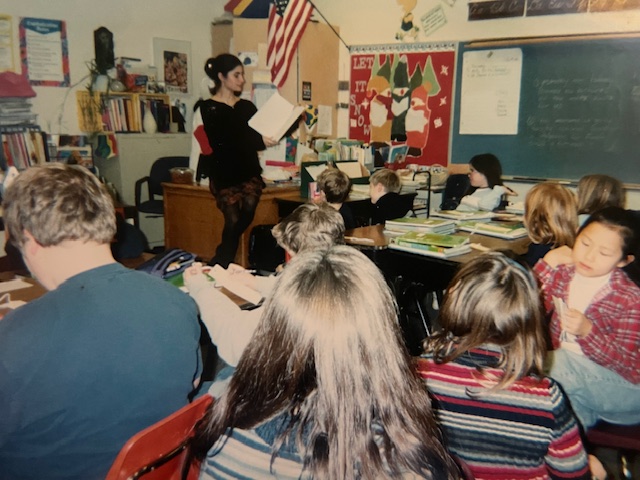
My first experience came during 2000 when I worked at Bannockburn School, a public K – 8 institution in a Chicago suburb in Illinois. I was tasked with assisting the teachers in both 2nd and 3rd grades there and teaching a group of students between the grade levels. That season of educating students taught me so much as the teachers I worked with had already logged over 25 years of teaching and shared all their wisdom with me. I also learned first-hand how federal policies and administrative mandates were making their job difficult and separating them from the joy of teaching their students.
When September 11, 2001 occurred, I joined many of my generation in a call to national service of some sort: for my husband and I that entailed going to Washington, D.C. and working for our U.S. government. I was able to land a job working for my home congressional district and congressman from Florida and later would swear an oath to the Constitution and serve as political appointee at the U.S. Treasury Department in the George W. Bush Administration.
In both roles I interfaced with the U.S. Department of Education—especially when helping my congressional member with appropriation bills and trying to figure out what and why our Florida constituents were dependent on this department for federal funds. No Child Left Behind was a bipartisan bill that was written, passed and heralded as the triumphant answer to help students in our nation do better in their assessments related to their grade levels. Its anticipated success would not be realized in coming years. The same fate would follow when Common Core Standards were initiated in later years: parents revolted with the math standards and students increasing suffered test anxiety.
Although I had a few friends who worked at the U.S. Department during the G.W. Bush Administration years, I began to doubt its relevancy as I received meetings with educators and school administrators from Florida that were finding the federal overreach to be extreme and unhelpful. Perhaps we should have tried to address the cracks in the foundation we saw as “worker bees” back in those years, but collectively we trusted those in charge.
Transition: Post-Government, Post-Graduate Education, Homeschooling Mom
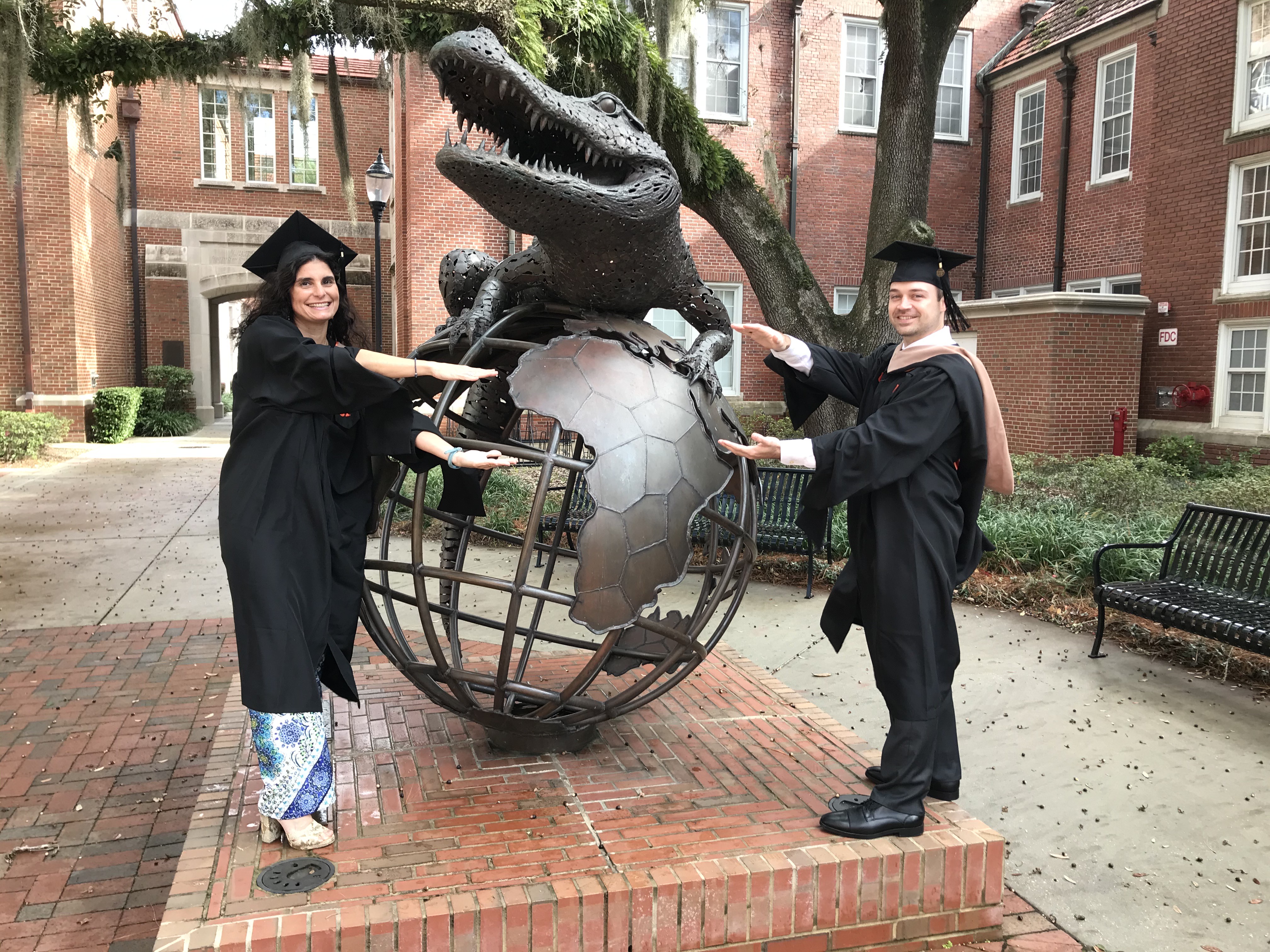
As I transitioned from government service in Washington, D.C toward starting a family, I began a Masters of Education degree work at Marymount University in 2007 that was put on hold until a later date in 2018 when I returned to University of Florida to pursue and ultimately graduate in late 2020 with a Masters in Business Administration.
My time at Marymount University gave me the opportunity to learn with Dr. Raja T. Nasr who impressed on me the history of public education and the possibilities that lay for education in general in our nation. It was during that season that I decided with my husband that I’d like to pursue an alternate route with our children, the first one born in summer of 2008. My goal as I embarked on the path of being a self-made homeschool “Ms. Frizzle” (think Magic Schoolbus book series) was that our children would enjoy learning and “socialization” was of top concern.
In fact, the first question I got from people inquiring about where our kids went to school was, “What about socialization?” The irony of this question would reveal itself over the years as we limited any screen time for our children and instead made interaction with people paramount in every facet of their daily lives: from grocery store visits, sitting at a family dinner table, at meal times in outside environments like restaurants, hybrid education options like museum or library classes, online classical academy and the list goes on. Basically, as we as a society pivot to the dramatic changes in our world, the same is true when managing a homeschool-centric education system. Consider this: AI is learning faster than we realize, in kind, our thoughts on how to educate our students must be ever-flexible and nonstop vigilant.
Over the years, I’ve stayed in touch with our local public school system through the Home Education Office in Palm Beach County. As one of our children is fast approaching graduation from the K -12 education paradigm, I’m grateful for all the assistance and guidance from friends and colleagues alike who have served our nation as educators and workers in our school systems nationwide.
What I’ve noticed repeatedly, however, is that while the U.S. Department of Education in its current form may have a beneficial effect on our nation’s overall conversation about critical things like literacy and access to education for all children, there is another side that drags in a negative direction with things like excess of taxpayers’ dollars at work for divisive programming that’s better left to individual state control and oversight. The financial glut of the federal government agencies includes even the noblest intentions like education of our nation’s next generation.
Can We Reach a Conclusion?
As I write this, my personal calling as a wife, mother and educator tugs at me to conclude this piece by reiterating that I always hold hope for our nation. Regardless of who is in our Executive Branch in the United States, the question of the effectiveness of the federal Department of Education is a valid one and deserves constant attention during any presidential administration.
As for getting rid of it? It could be downsized at first and rebranded to assist each state and their education heads to accomplish their respective goals. The civil servant staff at Department of Education could be transformed and transferred to serve other educational purposes more effective than just running through statistics and creating new federally-funded programs. Again, the reality of AI programming replacing people at desks deserves recognition even though most of the public is not dealing with this irreversible reality.
Keep it at all cost? Perhaps compromise again is available on this side of the argument. Again, I believe there is a compromise found in the details—is downsizing practical with the end goal of phasing out dependence on federal funds through the Department of Education? This is a debate that can have no end but I have hope that all sides can agree that it is worthy of attention and working out for the better of our nation’s future as we advance alongside our technological wonders like artificial intelligence while trying to maintain and enrich our own as humans.
R.V.S.Bean
 CEO of the Home