After awakening to listening to a congressman talk about upcoming legislation debate on whether Congress should intercede with a bill imposing a block on respective states regulating the AI sector on CNBC’s Squawkbox this morning, I decided to finally open my eyes and drag myself out of bed and take black labrador retriever Serena for a jog through the heavy humid air in our neighborhood.
Left the iPhone behind, just me and my dog–needed to feel the air, hear the busy sounds around and overhead–need to move this weary physical frame that can barely process the speed of information on a daily basis. The drive to feel human.
The Palm Beach International airplane traffic has picked up, private and commercial jets fly overhead in their departures and arrivals every few minutes especially in the morning hours.
The houses in our neighborhood have slowly been morphing from the old Florida 1970s ranch-style one-story homes into tall and often two-story mega-mansion type homes on these 1-2 acres of land plots that are almost unheard of east of the Florida Turnpike and Interstate 95. Horseshoe Acres is a mix of the old and the new, a brackish water so to speak.
As Serena and I fall into a comfortable rhythm, I can sense my mind relaxing and beginning to sift through the Artificial Intelligence debates that abound–taking into account that AI software and algorithms have been set in motion long before the public square began to whip into a fury about it.
I also ponder and acknowledge the sad but real fact that there are great segments of our society that pay no mind to any of these public policy struggles when it comes to the exponential speed of the advancement of AI technology, i.e latest versions of ChatGPT versus Gemini and so forth…then my right knee starts twinging in pain and I make the reluctant turn back to the house to continue packing the car for our Thanksgiving trip.
We are all still learning what it is to be human and here we’ve taken our free will and creativity to make something like us and better so in terms of data processing and calculations.
Is the teacher truly glad when the pupil becomes “smarter” than he?
The question of ROI, or more critically, the risk of harm versus benefit is something we must keep in mind as we unveil our latest and greatest AI tool.
What should we do if an AI system shows in training models that it has the capacity to advise a human to do a detrimental thing like create a bioweapon capable of mass casualties? What if a human child emotionally connects to an AI model server and not its actual parent? The “what-ifs” can hit a critical mass with something like this lightning fast technology.
And yet, there’s no stuffing it back into the proverbial Pandora’s box. How do legislators and public servants proceed? What does the regular human do in light of these advancements that he/she can choose to engage in or not?
Suddenly I understand the reservation of those people in our past who were wary of the invention of the wheel, electrifying one’s home, sending emails and now: to use or not use AI (at least when you’re aware of it) is truly the question of the day and already many people are defaulting to one setting or the other.
I have purposely avoided using AI platforms if I can help it- I don’t engage with “chatbots” and when calling a bank/billing service it’s become a game to me to find the human on the phone. Even that they’re trying to mimic on the phone with new AI models–tricky business customer service is these days.
Am I better for avoiding integrating AI in my every day if I can help it? No, absolutely not, it’s just a free will choice such as I don’t use social media every day to find my news, etc.
Will I be left behind by the human race? I don’t feel anxious that I will, just perhaps that I will help be a mediator between our version of the “old” and the “new”.
What I am sure about is that as I’ve taught my children and other students in my online academy: we humans are still in “school”, we are still learning what is to temper ourselves and at the same time expand, conquer old habits and create new ways to help calm our common fear of finality—we crave Eternity.
The Case For and Against Keeping the Department of Education: from a Florida Homeschooling Parent
November 20, 2024
The Why: Why Write This Short Blog Post as CEO of the Bean Home?
President-Elect Donald J. Trump has nominated Linda McMahon to be the next Secretary of Education pending Senate approval. I have some thoughts to share in the case for and against keeping the Department of Education as an operational entity in Washington, D.C. My hope is to help infuse some ideas and calm anxieties regarding the possibility of losing the department entirely. This humble article aims to touch on just the peripheral details I can offer from my life experience in education.
Note: For those especially alarmed by the idea of change, the Department of Education in its current form only started with congressional action in 1979 and its first inception in 1867 its “main purpose was to collect information and statistics about the nation’s schools”— more on its history can be found at www.ed.gov: https://www.ed.gov/about/ed-overview/an-overview-of-the-us-department-of-education–pg-1
Author’s Background
My connection with the U.S. Department of Education began in the late 1990s when I participated in a federally funded program called “America Reads” which was aimed at helping literacy in schools during the Clinton Administration. At the University of Florida, I was trained and subsequently worked as an undergraduate student helping elementary students who were struggling with their reading skills. This positive experience encouraged me to pursue an initial path of training to become an educator in our public schools.
My first experience came during 2000 when I worked at Bannockburn School, a public K – 8 institution in a Chicago suburb in Illinois. I was tasked with assisting the teachers in both 2nd and 3rd grades there and teaching a group of students between the grade levels. That season of educating students taught me so much as the teachers I worked with had already logged over 25 years of teaching and shared all their wisdom with me. I also learned first-hand how federal policies and administrative mandates were making their job difficult and separating them from the joy of teaching their students.
When September 11, 2001 occurred, I joined many of my generation in a call to national service of some sort: for my husband and I that entailed going to Washington, D.C. and working for our U.S. government. I was able to land a job working for my home congressional district and congressman from Florida and later would swear an oath to the Constitution and serve as political appointee at the U.S. Treasury Department in the George W. Bush Administration.
In both roles I interfaced with the U.S. Department of Education—especially when helping my congressional member with appropriation bills and trying to figure out what and why our Florida constituents were dependent on this department for federal funds. No Child Left Behind was a bipartisan bill that was written, passed and heralded as the triumphant answer to help students in our nation do better in their assessments related to their grade levels. Its anticipated success would not be realized in coming years. The same fate would follow when Common Core Standards were initiated in later years: parents revolted with the math standards and students increasing suffered test anxiety.
Although I had a few friends who worked at the U.S. Department during the G.W. Bush Administration years, I began to doubt its relevancy as I received meetings with educators and school administrators from Florida that were finding the federal overreach to be extreme and unhelpful. Perhaps we should have tried to address the cracks in the foundation we saw as “worker bees” back in those years, but collectively we trusted those in charge.
As I transitioned from government service in Washington, D.C toward starting a family, I began a Masters of Education degree work at Marymount University in 2007 that was put on hold until a later date in 2018 when I returned to University of Florida to pursue and ultimately graduate in late 2020 with a Masters in Business Administration.
My time at Marymount University gave me the opportunity to learn with Dr. Raja T. Nasr who impressed on me the history of public education and the possibilities that lay for education in general in our nation. It was during that season that I decided with my husband that I’d like to pursue an alternate route with our children, the first one born in summer of 2008. My goal as I embarked on the path of being a self-made homeschool “Ms. Frizzle” (think Magic Schoolbus book series) was that our children would enjoy learning and “socialization” was of top concern.
In fact, the first question I got from people inquiring about where our kids went to school was, “What about socialization?” The irony of this question would reveal itself over the years as we limited any screen time for our children and instead made interaction with people paramount in every facet of their daily lives: from grocery store visits, sitting at a family dinner table, at meal times in outside environments like restaurants, hybrid education options like museum or library classes, online classical academy and the list goes on. Basically, as we as a society pivot to the dramatic changes in our world, the same is true when managing a homeschool-centric education system. Consider this: AI is learning faster than we realize, in kind, our thoughts on how to educate our students must be ever-flexible and nonstop vigilant.
Over the years, I’ve stayed in touch with our local public school system through the Home Education Office in Palm Beach County. As one of our children is fast approaching graduation from the K -12 education paradigm, I’m grateful for all the assistance and guidance from friends and colleagues alike who have served our nation as educators and workers in our school systems nationwide.
What I’ve noticed repeatedly, however, is that while the U.S. Department of Education in its current form may have a beneficial effect on our nation’s overall conversation about critical things like literacy and access to education for all children, there is another side that drags in a negative direction with things like excess of taxpayers’ dollars at work for divisive programming that’s better left to individual state control and oversight. The financial glut of the federal government agencies includes even the noblest intentions like education of our nation’s next generation.
Can We Reach a Conclusion?
As I write this, my personal calling as a wife, mother and educator tugs at me to conclude this piece by reiterating that I always hold hope for our nation. Regardless of who is in our Executive Branch in the United States, the question of the effectiveness of the federal Department of Education is a valid one and deserves constant attention during any presidential administration.
As for getting rid of it? It could be downsized at first and rebranded to assist each state and their education heads to accomplish their respective goals. The civil servant staff at Department of Education could be transformed and transferred to serve other educational purposes more effective than just running through statistics and creating new federally-funded programs. Again, the reality of AI programming replacing people at desks deserves recognition even though most of the public is not dealing with this irreversible reality.
Keep it at all cost? Perhaps compromise again is available on this side of the argument. Again, I believe there is a compromise found in the details—is downsizing practical with the end goal of phasing out dependence on federal funds through the Department of Education? This is a debate that can have no end but I have hope that all sides can agree that it is worthy of attention and working out for the better of our nation’s future as we advance alongside our technological wonders like artificial intelligence while trying to maintain and enrich our own as humans.
NOTE: This is essay was one of my assignments for my current graduate course as part of a Masters of Arts in the Great Books I’m slowly pursuing through the online Memoria College entitled: “Man in Society: The Development of Political Theory”
Week 7
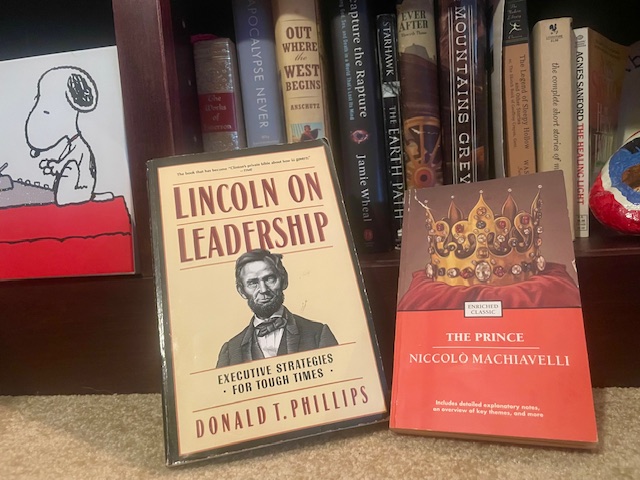
As I read through “The Prince” by Niccoló Machiavelli for the second time in my life, it was the written words of U.S. President Abraham Lincoln that resonated in my mind. Would it be plausible that Machiavelli and Lincoln could be friends if they lived in the same lifetime together?
I humbly propose that there are enough overlapping sentiments in their respective philosophies regarding how a leader should glean various opinions of counsel to make executive rulings or decisions that support the fantastic idea of their propensity to have been collaborative colleagues.
My methodology for this light inquiry will involve study of Machiavelli’s “The Prince” as well as a closer look at a collection of Lincoln’s words in Donald T. Phillips’ “Lincoln on Leadership” that was first published in the early 1990s that was once dubbed former President Bill “Clinton’s private bible about how to govern.” -Time Magazine
An appropriate starting point for Machiavelli’s work can be found in chapter 13 entitled “How Flatterers Should Be Avoided” where it is explained why it is crucial for a leader (in this regard, a “prince”) to seek the counsel of others beyond his “yes men”: “With these councillors, separately and collectively, he ought to carry himself in such a way that each of them should know that, the more freely he shall speak, the more he shall be preferred; outside of these, he should listen to no one, pursue the thing resolved on, and be steadfast in his resolutions; He who does otherwise is either overthrown by flatterers, or is so often changed by varying opinions that he falls into contempt.” (Chapter XXIII, pp. 33-34). This section in particular is fascinating because it can be interpreted that it espouses a prince should be open in his dealings with those who would counsel him on how to approach a particular subject matter but at the same time hold his opinions tight in silence—arguably allowing both factions of those who would speak flattering words to receive his good graces as well as those who are being disagreeable with him to be truthful. In other words, the prince who stays silent on which direction(s) he may follow will allow those who are jostling for his ear to feel more comfortable to be themselves, whether authentic or not.
How would Abraham Lincoln possibly interpret the theory of how to receive wise counsel when governing? “I shall do nothing in malice. What I deal with is too vast for malicious dealing.” – Lincoln’s comments in a letter about the readmission of Louisiana to the Union (July 28, 1862) from Lincoln on Leadership (p. 58, Phillips) In Chapter 5 of “Lincoln On Leadership”, Phillips sets forth the argument and explains that Lincoln was a remarkable leader because his personality was at its core committed to being honest, compassionate and having mercy—further, there are numerous examples in his public life of governance that reflected an ability to seem impervious to feeling hateful or vindictive toward others in general. “While kindness was the very foundation of his personality, Lincoln also understood that if people were going to come to him with ideas, suggestions, and better ways of making things work, he had to provide the climate to allow it. He actively encouraged innovative thinking and the participation of subordinates.” (p. 58 – 59)
President Abraham Lincoln held court with both his friends and his enemies during his tenure as U.S. president. In fact, some of his greatest accomplishments especially by way of correspondence and oratories were because of his interactions with those who vehemently disagreed with his personal philosophies as he led a nation throttled by the Civil War years in a still growing United States of America. In kind, Machiavelli also served during a tumultuous time in Italian history when early in his working years he was involved in the raising of a Florentine army only to be crushed publicly and privately when the Medicis came back into power in February of 1513.
The similarities diverge for both men when it comes to how they spent their post-career days, whereas Machiavelli was afforded the time to retreat, reflect and therefore write powerful books like “The Prince” and “The Art of War” to share with generations thereafter, Lincoln’s life was snuffed out in an instant in what is known as Ford’s Theatre in Washington, D.C. with only letters and eyewitness accounts to help share his servant leadership philosophy with history.
R.V.S.Bean
Bibliography:
Phillips, Donald T., Lincoln on Leadership: Executive Strategies for Tough Times. Hatchette Book Group, New York, NY.
Machiavelli, Niccolò. The Prince: Enriched Classic. Simon & Shuster. New York, NY
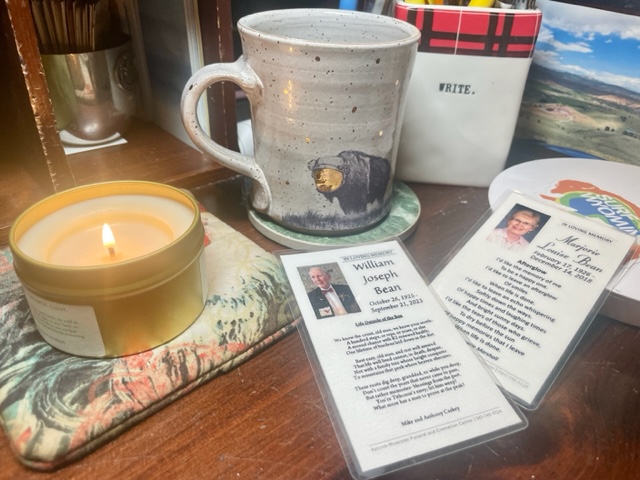
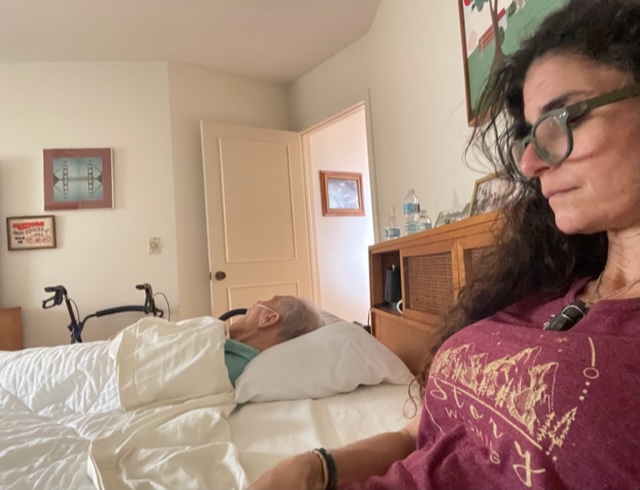
Note: This is a personal mini-essay reflecting on the bittersweet experience of sharing in the hospice care at home for a loved one who passed away on September 21, 2023. +
The Spark is Sputtering, Now What?
It was about this time last year that we noticed the differences in Granddad Bill Bean’s daily routine. He was getting more out of breath than usual during his walks and he was eating less at the dinner table. Increasingly he was experiencing various awkward incidents ranging from mental slip-ups to physical shortcomings.
After living with this man since 2009, I began to sense his needs were outpacing his desire to accept help and that’s usually when reinforcements are needed in a caregiving home such as ours had become over the years. As I grappled with the reality of the present, my mind invariably rolled backwards in reflection and nostalgic amazement.
Big, Bright and Bold Always
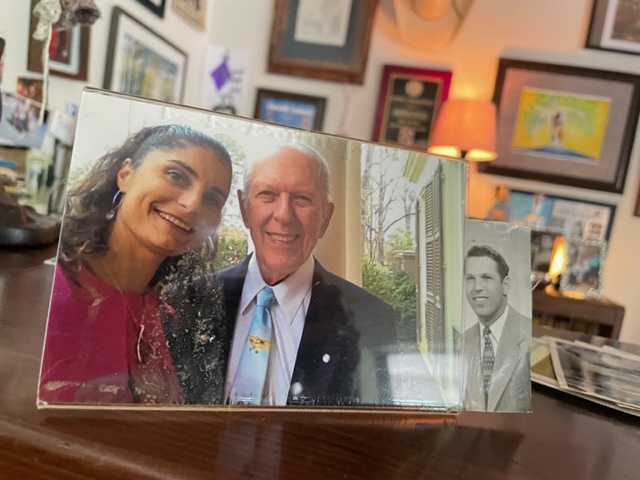
“Welcome to the good ship lollipop!” said Dr. Bean to me the first time I met him at his home here in Palm Beach Gardens, Florida in late 1997. I was on holiday break from the University of Florida and had just started dating his grandson, Thomas Alexander Bean—this was my introduction to “Granddad” of whom I’d already heard about in conversations with Thomas.
Little did we both know that one day we’d be living under his roof with his wife and helping Granddad care for her until she passed away after a long battle with dementia in 2018. How could I fathom as a 19-year-old college student that in that over a decade he would be instrumental in helping raise a few of his great-grandchildren, setting the table for daily meals we’d crank out and his sharing holidays along with his family, friends and with my side of the family?
I cannot properly encapsulate in this piece all that Dr. William Joseph Bean was in his lifetime, a member of the “greatest generation”, WWII era person he was—his obituary barely scratches the surface: https://www.dignitymemorial.com/obituaries/jupiter-fl/william-bean-11470118 By the time I met him he was barreling into his golden years in his early 70s with no signs of slowing down as an active Rotarian and still flying his own plane to visit family and friends.
What I can memorialize here is that Granddad Bean took every day in bold color, as if everything around him was a black and white movie reel and he had a bucket full of thousands of color hues varying in their intensity. He hurled those colors and sharpened their focus on the people he engaged with in all facets of his life: a trinity life scope of God, family and country.
I was enchanted immediately with his energy and love for others no matter how different they were from his personal sensibilities. Having never really known my own respective Greek grandfathers, Granddad Bill became the grandfather-in-love of my lifetime.
Tunnel Vision of Declining Health
Reminiscing on the “good old days” afflicts us all and usually is a coping mechanism to help soothe us when the current situation isn’t favorable. As Granddad’s health began to deteoriate, the communications with his children became longer in length and depth while more frequent as well. This was early 2022 and we’d been so grateful to have survived the “Covid-19 pandemic” years that our hearts weren’t prepared for the rapid decline to come in the months ahead.
This was also the 3rd year that I would be leaving in the early summer months to go work out west with my three children in tow. Knowing that my husband’s parents would stay at the house while we were gone and that various family members would cycle in and out of the house helped me pack our things to head out to my work commitment. The children and I stayed in touch and sent Granddad frequent letters and postcards. Still, the shock was devastating when I learned that after the first few weeks of our absence that he dropped in his daily weight some 15 pounds or more.
At 97-years-old Granddad was not a typical nonagenarian, he was convinced that he was going to make it to 100 years old and perhaps beyond given his track record of vibrancy despite the odds. But as his body began to fail him in small ways they began to snowball in big ways.
It was Granddad himself who concluded that he should have a night nurse assistant so that he wouldn’t repeat falling on the floor and being stuck there until someone came into the house in the morning. This was a huge and humbling step for a fiercely independent man that once gave me a dirty look when I tried to help him physically when I was fresh out of college in the early aughts.
A Final Hurrah: Kaden-Bean Reunion Where It All Began
It turns out that having us host the Bean-Kaden reunion last June was fortuitous and allowed many in the family branches to come and be with Granddad Bill while he was still lucid as his body was failing him. I flew back with the kids for a week to be with everyone, I spent nearly every night in his room along with the night help as I wasn’t sure if we’d see him again on this Earth when went back west.
There is something so beautiful about witnessing all the different people that Granddad had been involved with in his life come and visit him. This included friends, colleagues, church folk and others along with his family lines that crisscrossed his and his wife’s bloodlines. His mother was Jewish, his father Christian and there’s at least one grandchild who is Muslim—right there a few of the major religious affiliations are represented in his love for his family and then beyond.
What truly shocked me, however, was how much Granddad Bill was taking in even as he was physically struggling. For instance, the night before I was due to take a flight from Fort Lauderdale to Denver he awoke next to me and looked over and said, “You’re leaving today aren’t you?” My groggy senses at just after 3am had me thinking I was dreaming but we began to talk for over an hour as the night nurse slept in the chair opposite us. I still marvel at how clear his senses and words were as he spoke with me before he fell asleep again.
I wouldn’t take it back now but I did have the children give their “final” goodbyes as we left the house that morning in case he wasn’t here when we returned later in the summer. It nearly destroyed me to listen to my oldest muster up two words to him as he stood over his bedside, “thank you”.
“Team Bean”: Grateful For the Seen and Unseen
If you’re still reading this either you know me or you don’t—but why am I sharing these thoughts? I believe because we all somehow will be affected by a loved one who is dying slowly sometime.
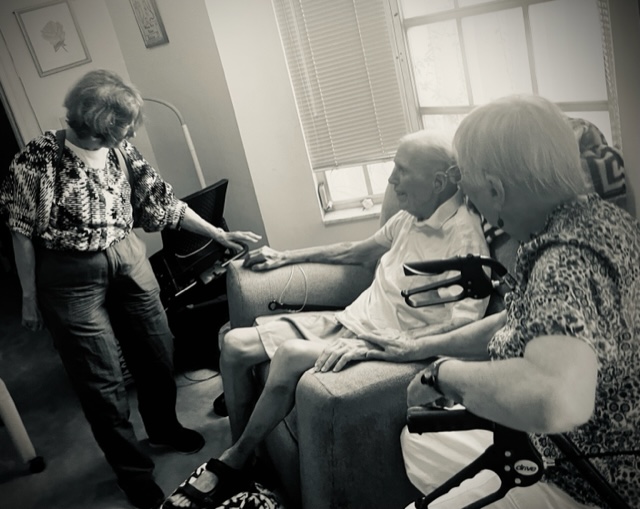
Looking back, I regret nothing about being involved along with my loved ones to help both Granddad and Grandma in their respective hospice care seasons in their home here. They lived beautiful lives and loved others so much, it was an honor and a blessing to be with them until they crossed over.
If by some remote chance you don’t experience a hospice-like situation with family, I’m willing to bet that you’ll know someone close to you who does have to deal with this season of life.
Either way, I can relay to everyone that it takes a team of blood-haves and blood-have nots, simply it takes insiders and outsiders alike to help this type of journey unfold for the person reckoning with their final days beyond their control.
In our most recent case with Granddad Bill we dubbed it “Team Bean” to include everyone from the core group of family members and everyone in between to the Visiting Angels nurses who assisted to the friends and family tagging in and out in various ways.
For those who know me personally, my major love language is food and preparing it for others. When I returned later in the summer and Granddad Bean was still with us, the daily preparation of food became a chore almost insurmountable for me on some days. I will always be grateful for those who helped feed us all as we helped him and grieved him later on.
If I could describe what the last few weeks were like with our dear Granddad as he approached the finish line of his life here at home, it is this bit I found scrawled out in my handwriting as I cleaned out my writing desk this month, dated September 8, 2023:
It’s like a slow
gnawing pain deep
inside one’s chest
and yet at the same
time, there is a nurturing
from within that must
go out from that place
of chronic hurt to give
cheery love to the
person who is slowly
dying.
R.V.S.B.
P.S. Books galore on helping the aging and dying, here are a couple I personally found helpful over the years:
I begin this piece with the above question because this type of insecurity manifested is precisely why you should consider growing herbs here in south Florida (and elsewhere for that matter).
Although my history of facilitating the growth of plants spans a few decades, I will admit readily that my early years were pot-bound experiments consisting of basil, parsley and puny tomato plants with low yields.
Also full disclosure, those plants just needed water and sunshine to grow—but there are some tips that I can share with you after my years of experience to ensure that they go beyond just the photosynthesis operation in motion and flourish with repeated yields of harvest and unparalleled joy at their simple existence. At least in south Florida.
Where Do I Begin? Start With What You Know and Use
At the end of my essay I hope to share a few of my favorite books that you can consider, however, we’re blessed to live in the 21st century with a World Wide Web of shared knowledge to research and pull from if you have access to the internet. In other words, you can start tomorrow if you start looking up stuff tonight on the subject of herbs.
My humble advice is to start with what you know and love: Do you like basil? Parsley? Cilantro? Mint? Rosemary? Celery? Oregano? Great news! They all thrive in our latitudes of south Florida! They also are consistent year-round and in some cases like oregano and parsley, they don’t flower on an annual basis. (caution: I can only speak to my experience at my coordinates at 26.8396° N, 80.1019° W).
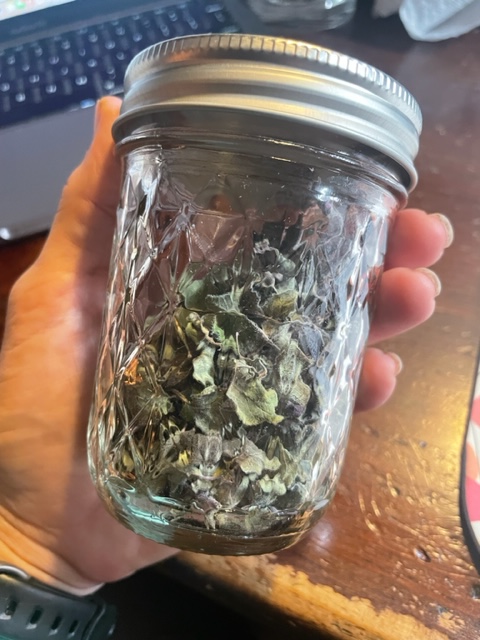
The great thing about herbs is that a little goes a long way. Herbs can be enjoyed both fresh or dried—I personally own a dehydrator to help with bumper crops of my herbs but you can use your oven or just hang to dry in a cool, humid-free area of your home. Below is my latest Greek oregano harvest in a jar, no need to crush the leaves after they’re dried. It’s best to do that when cooking with them as it helps retain the flavorful oils within.
Seriously though, stop and think about which are the herbs you love to consume, smell or just enjoy the look of and chances are that they can grow well for you. Chances are that there will be at least one or two that come to your mind immediately. Try those as even their minimal success in your planting will offer encouragement to continue and add new ones to your gardening habit.
It was only a couple years ago that I finally started some herbs from seed. I reveal this to make sure I don’t come off as if I know everything when it comes to growing these natural pharmaceuticals so to speak. Recall that many, if not most, of our synthetic drugs come from amazing plants growing in our planet. That being said, you should always research thoroughly and consult your health team when considering taking a copious amount of any particular herb or combination thereof. Caution: be especially careful when pregnant, there are certain herbs that can help and others that can hurt a woman with new life growing within.
As for procuring herbs to grow we are afforded the luxury of being able to purchase seedlings or established herbs in pots at most nurseries and big stores like Home Depot or Lowe’s. If the latter is your choice, I advise that you start with a variety of basil, parsley, rosemary or mint as these types are resilient in pots if you don’t have access to a garden bed or
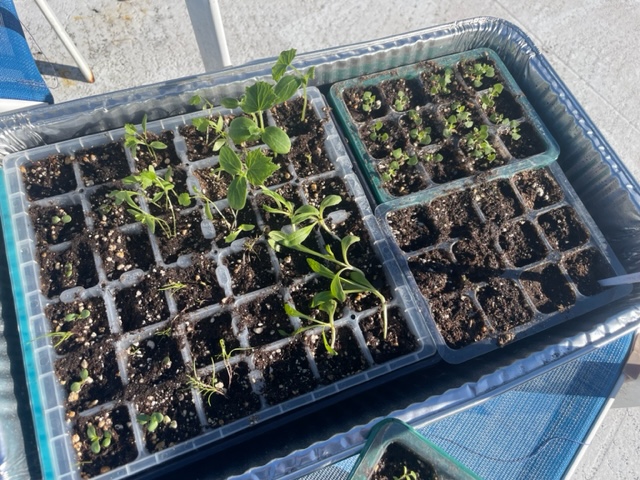
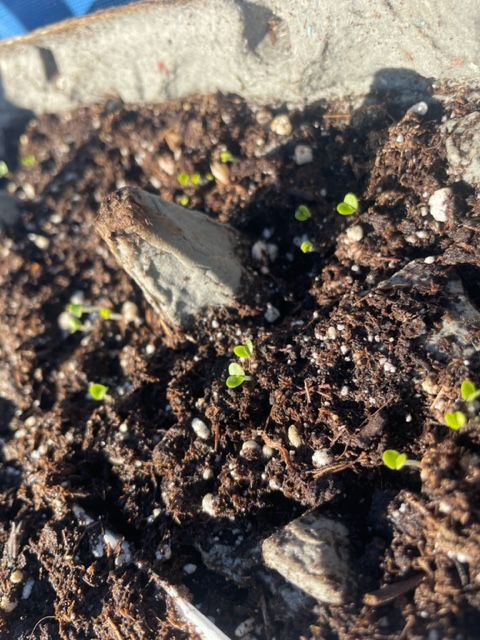
However, if you have a little extra time or are particularly mindful about your sources, I would like to encourage you to try starting your favorite herb (or two or three) by seed as it ensures the diversity of whatever palette you have, the nutritional needs of your household or simply your adventurous spirit. You can purchase all sorts of seedling trays or just reuse egg cartons and be sure to provide holes for drainage.
For Book Lovers: My Personal List of Herbal Guides et al
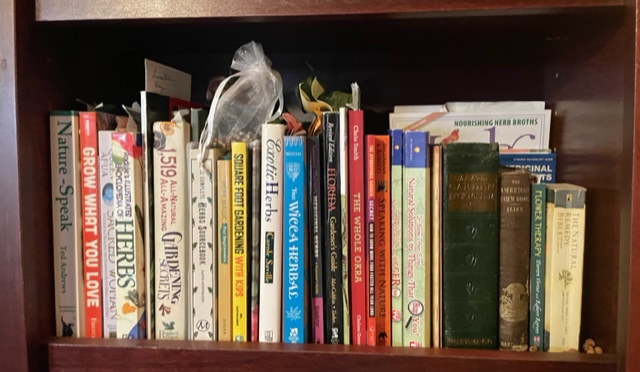
Although we have numerous social media platforms today and internet search engines where you can “google” or “duck go go” whatever search word you’d like, such as “parsley”, I still enjoy going through pages of books and marking places of interest. Plus, you don’t need a Wi-Fi signal or batteries to learn about things like making a “medicinal basil pesto” recipe if you have a ton of basil and how you can freeze it for later.
Here are a few of my well-worn favorites should you want to have a book or two to help your herbal growing journey:
Medicinal Herbs – A Beginner’s Guide by Rosemary Gladstar
Rodale’s Illustrated Encyclopedia of Herbs by Claire Kowalchik & William H. Hylton
Mother Earth News magazines – any of them – they even have archives
Herbal Cosmetics pamphlet by Jim Long (this guy has a lot of experience www.longcreekherbs.com)
Florida Fruit & Vegetable Gardening by Robert Bowden (Celery is listed as a vegetable in this book, technically however it is an herb)
My Herbal Journey-At Least A Slice of It
Just a Handful of Hints: Heat Loving Herbs
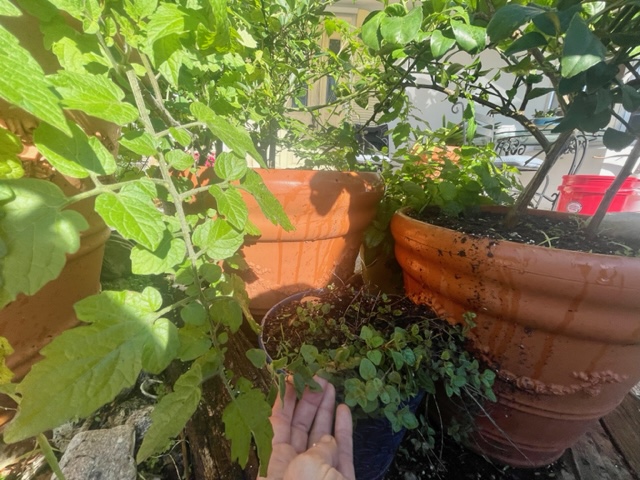
In my humble south Florida gardening experience, I’ve found that oregano, lemongrass and basil just keep going despite the onslaught of heat and humidity that we can experience here for most of the calendar year.
Basil is the first plant I recall watching over and interacting with as a young child. It was in a pot and it did well when I regularly pruned it. When it flowered (I find it flowers often in Florida) I discovered that the seeds were well hidden behind the flowers and only accessible once the flowers fell off and the strand was dried. Fresh basil is unparalleled in its potency of flavor and ability to dress up any food dish as a decoration or an additive. Due to its high water content, basil is a bit more cumbersome to dry but will do well in a dehydrator as long as you seal it into a jar that’s airtight for storage. Recently, I tried a new basil variety via seed start, “lemon basil”, that is found at https://www.rareseeds.com/basil-lemon. Awesome flavor, hardly makes it back to the kitchen when I take a little out of my garden.
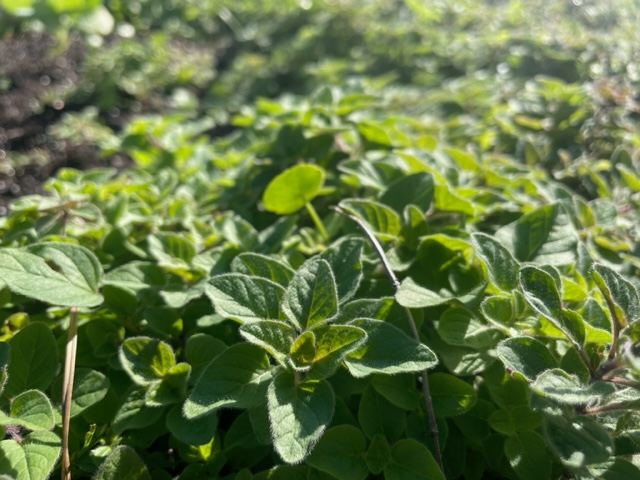
Oregano is my hero in that you can clip strands of it and stick it in a jar of water and it will grow roots to propagate easily. I have often gifted oregano in bouquets I give others or started them directly in a pot. My personal favorite variety is “Greek oregano” for its spicy flavor and when dehydrated makes a great culinary herb. The one pictured above I bought as a mail order seedling from one of my favorite suppliers called Mountain Valley Growers and I highly recommend their 6 plant combinations if you’re looking to start a base herb garden for cooking in your kitchen. They pack their live plants well and most of the plants I’ve bought from them over the last several years have survived and thrived: www.mountainvalleygrowers.com
Cilantro and Culantro: This is one of those herbs that you either love or hate. In my case, I absolutely adore consuming chopped up cilantro in fresh salsa or most any dish that involves onions or scrambled eggs. It easily reseeds itself and good thing since it bolts rather quickly. If you enjoy this herb even half as much as I do, I would advise either starting it by seed every couple of weeks or planting plugs you buy from a store once every 3-4 weeks to ensure a steady supply of fresh cilantro.
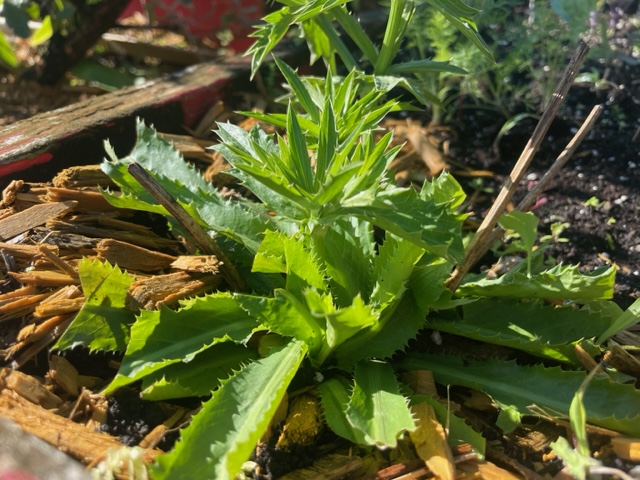
Culantro is the stiff and spiky version of cilantro. It also bolts to seed relatively quickly but its sturdy leaves continue to stay on the plant and can be cut and sliced thinly for whatever meal you’d like.
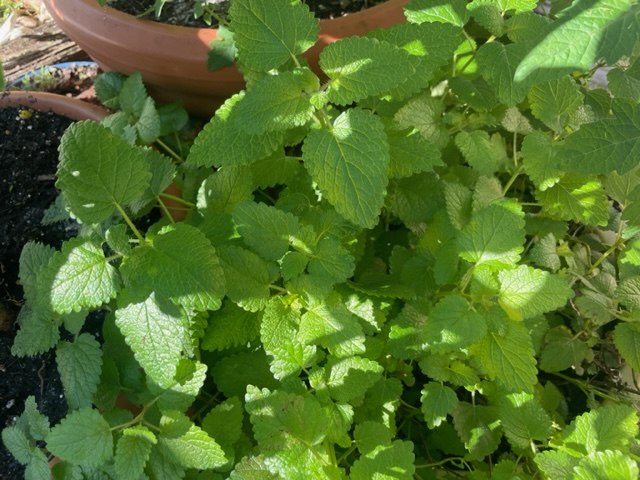
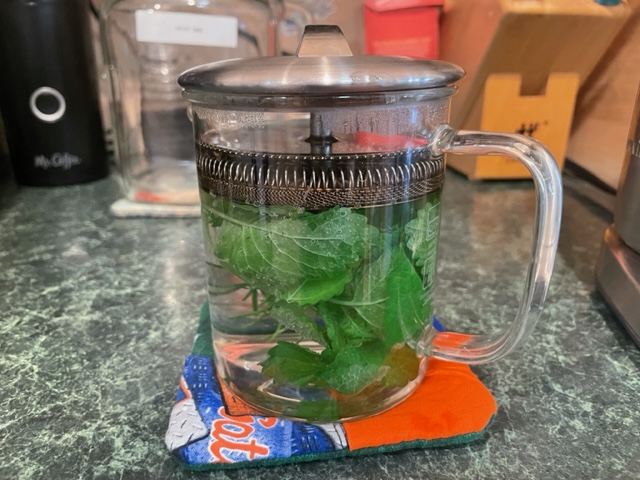
Lemonbalm needs regular watering and healthy soil but continues to give me a great yield even three years after I started it from seed. It seems to have a dormant period here in south Florida, usually May through September it’s muted in its growth. But it makes up for that pause the reast of the year with beautiful foilage and the opportunity to use its leave raw over a food dish or a spring with boiling water to make a refreshing lemon balm-infused water.
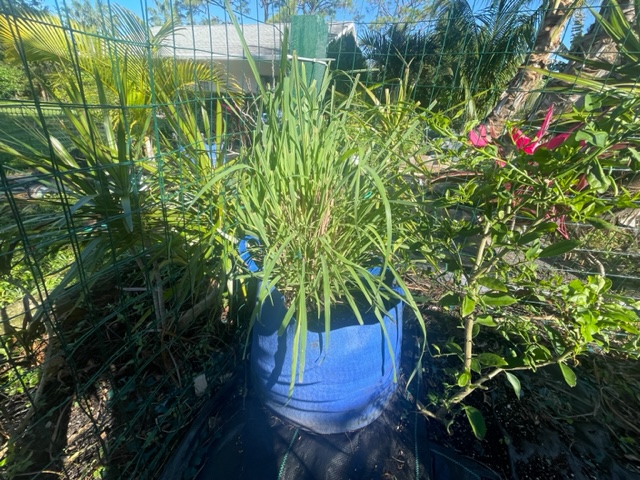
Lemongrass: You may be noticing a theme here, yes, I love anything lemon. Turns out lemongrass is an ingredient I discovered back in my Washington, DC working days as a congressional staffer when I first tasted Thai food, namely “Tom Kha Gai” which is a coconut milk based soup with among other savory ingredients—lemongrass. This is an incredibly easy grass to grow in south Florida which shouldn’t be surprising as I’m in the land of the Everglades nearby. Our climate here is conducive to all sorts of grasses and lemongrass is no exception. I now have two big pots full of lemongrass. Caution: like sawgrass or plants like sugarcane, the lemongrass blades do have a cutting/irritating surface and it’s easy to get minor scrapes when handling or harvesting (gloves are recommended).
Parsley is the first herb I cultivated in the ground while I was in high school. It thrived even when I couldn’t pay much attention to it as I handled my studies and extra-curriculars during those busy teenage years. As goes with many herbs, there can be many myths, legends, proverbs and such attached to certain ones. Parsley has one of my favorites: Parsley will only row outside the home of an honest man or a strong woman.
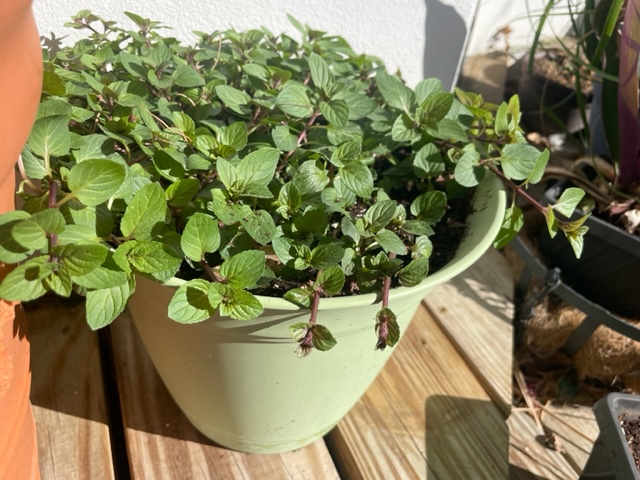
Mint has the reputation of being a rapidly spreading plant but I’ve not found that to be true here in south Florida. When I lived briefly in Chicagoland, yes. When I lived and owned a home in Maryland outside of the DC Beltway, most definitely! However, here in my Palm Beach Gardens plot I’ve lost at least 7 mint plants in the last 15 years. I currently have one in a pot that I thought was about to give up its ghost until I infused it with an organic water soluble feed and it came back from the dead like a chlorophyll-inspired Lazarus. Many may already know the benefits of having fresh mint available for edible use: think mint-infused water, mint tea, mint julep, mojitos and the list goes on.
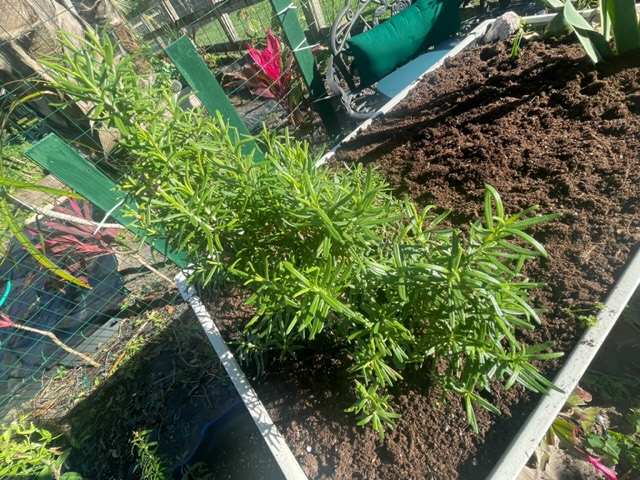
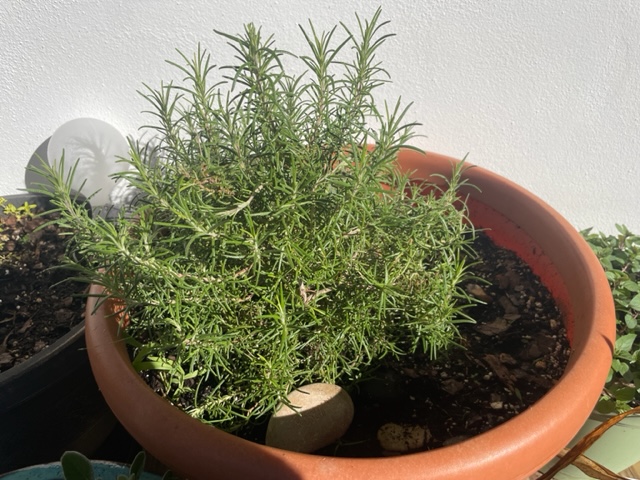
Rosemary is the last herb I’ll harp on as it’s also one of the most versatile herbs I’ve found in the past decade for our household and it frankly can stand the relentless heat that south Florida is known for. Traditionally, rosemary has been gifted to people who recently lost a loved one. You can snip rosemary and throw it into your bath for an aromatherapeutic treat. Roasted meats benefit from a sprig or two of rosemary for a delicious finish. Recently I tried a bread recipe for long bread strips with fresh rosemary in the dough as well as garnished on top. When we had hospice care nurses helping us with a loved one dying here at home last year, there was a woman from Haiti who taught me to make a simple tea with rosemary to drink as well as an infusion for my hair.
No End in Sight: Herbal Learning Continues
I will conclude this article by encouraging you to either start or continue your own herbal journey in growing what you know and moving to learning how to grow more of what you may need. It is likely I’ll continue to write on this subject in future essays and focus on particular herbs I’ve been able to cultivate and use in our household. The learning on this subject is literally endless for all of us.
Personally, I only learned recently that I can make teas on my own with fresh herbs and not only dehydrated forms. Lemonbalm steeped in hot water for a few minutes and then poured over ice makes for a refreshing water infusion:
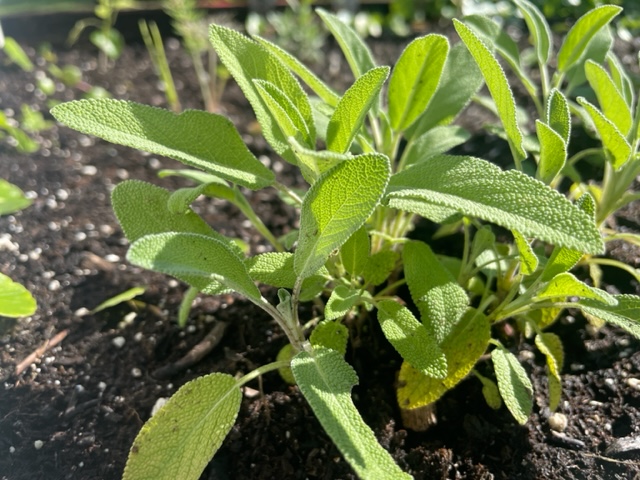
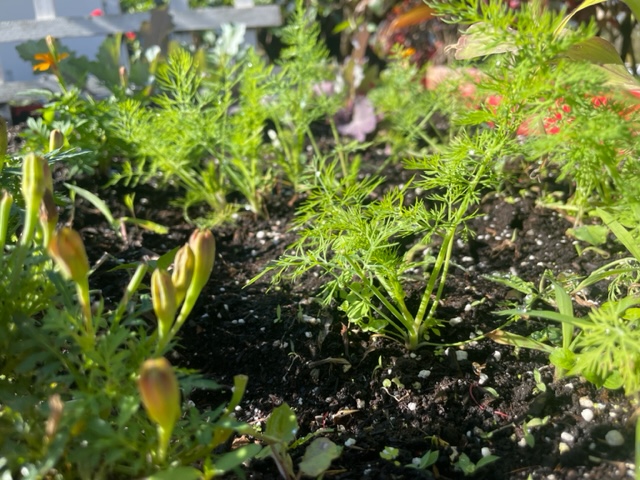
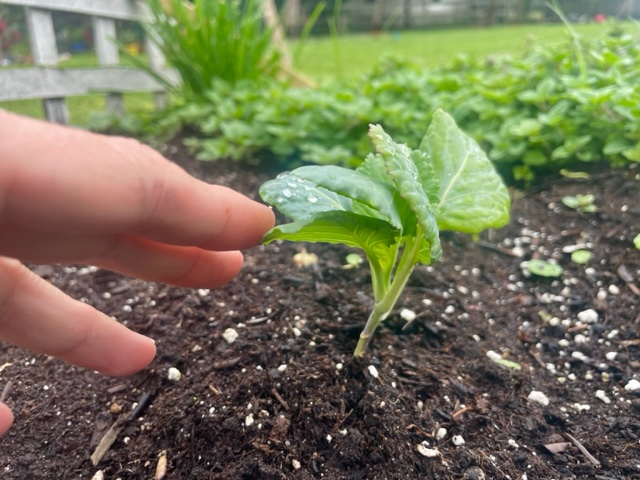
I’ve also been finding that it’s okay to take a garden bed and haphazardly throw several types of herbs together. Diversity in nature does well and helps the soil become stronger in its ability to retain and distribute nutrients. Ultimately, I’m finding that plants know their programming well and we can do our best and provide the conditions to help them live—the reward of harvesting and reseeding them is worth all the trials and eventual triumphs. Pictured below are baby dill plants along with marigold, culantro (out of frame) and my experimental kohlrabi in the background.
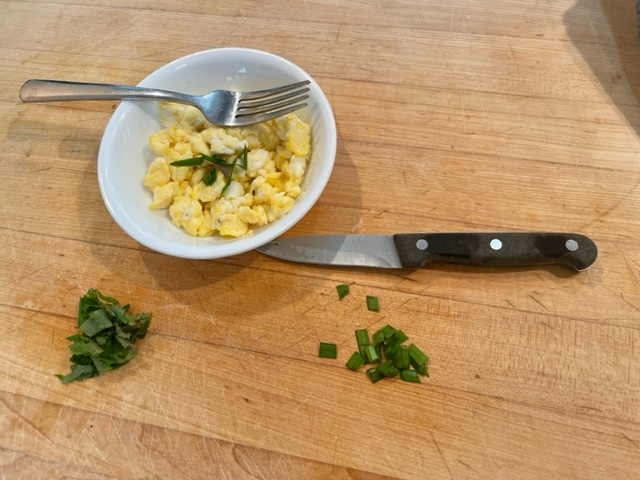
From a culinary perspective, I’ve also found that there are no real rules. You can take a simple dish like scrambled eggs and sprinkle on top your own mix of fresh herbs you have in your pots, garden beds or in the ground. Voilà, you have fresh produce with benefits!
Happy and blessed planting.
R.V.S.B.
“One is near God’s heart in a garden, Than anywhere else on Earth.” ~Dorothy Frances Gurney
In my quest as a south Floridian gardener and aspiring mini-farmer, I’ve been trying to figure out what types of edible plants I can grow and harvest in the 1 acre of what our late Granddad Bill Bean called “God’s great acre” of land.
Managing a busy family can be a deterrent to growing a garden but knowing that the general theory of photosynthesis applies to assist, I wanted to go beyond just growing herbs to find an easy food that we could harvest from our south Florida garden without too much *trouble. *By the way, “trouble” is defined as numerous pest and climate issues in my interpretation.
The What
If you’re reading this and you’re a parent or guardian, I don’t need to remind you that one of the many stresses we endure beyond what our children take in mentally is what they actually ingest as food in their body for the fuel which helps their body grow and hopefully flourish for the rest of their lives.
Turns out that as convenient as store-bought foods have become, there has been a lack of nutritional value in those offerings—especially when it comes to our kids getting their vegetables, namely greens. Recent inflation rates in groceries have made purchasing fresh produce more expensive than many families can handle—also, even if you could afford to buy lots of raw vegetables and fruits, their respective nutritional value decreases greatly from the moment they are harvested (many times before ripening) and so lose their potentency to impart what our bodies need from them:
Beyond that, there is also recent mounting evidence that how our produce is grown can affect the nutritional values, putting emphasis on regenerative growing practices that are more pragmatic and possible for smaller farms, homesteads or your garden bed:
You can do your own research but hopefully it’s become collective knowledge that a diet consisting of daily greens is important to ensure that our bodies are receiving the proper levels of vitamins A, C, K, and folate, calcium, magnesium and fiber among other things. These blends help to incorporate the other foods we eat to contribute to an overall healthy biome in our guts as recent medical research shows helps us to have a strong immune system overall.
The How
Forgive the redundancy for those who have followed my online articles before but I’m not ashamed to share a few of my favorite seed resources with you. While you can purchase seeds at big stores like Lowe’s and Home Depot, I don’t recommend doing that as it’s not always the right fit for your growing region and many times the seed stock is limited. Also, consider any local nurseries in your area as they may stock the appropriate plants destined to thrive in your respective area.
I trend toward small business outfits and those suppliers that have a good heirloom stock, these are my top favorites:
I was traveling in Savannah, Georgia several years ago when I had a dish called “Lemon Collard Greens” and I was overwhelmed with the flavor explosion and simultaneous realization that I was eating something that was also nutritiously good for me. I’d had collard greens before but they were usually mushy and bitter, like the side dish option available at Cracker Barrel.
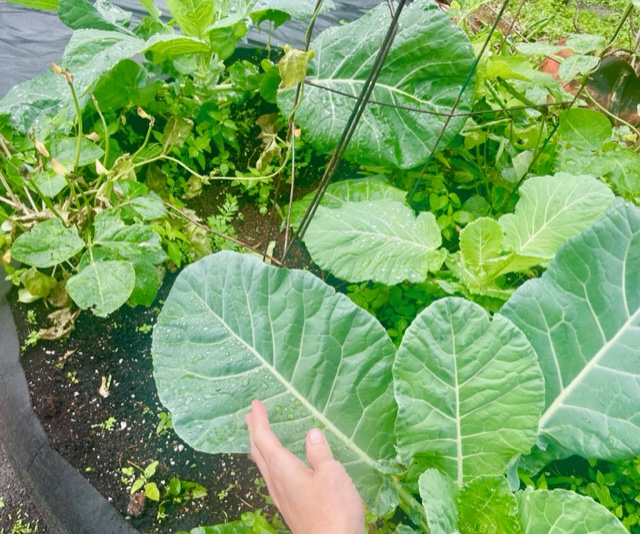
As I began my personal research on what I could attempt to grow here in the sub-tropical latitudes, “collard greens” came up as a top contender so I started to literally sow the seeds. Given my palate memory I figured that I could whip up that Georgia dish somehow if I had the produce in hand.
In south Florida, you can cut the germination labels of seed packets by at least 2-3 days because of the consistent heat and humidity levels. However, that doesn’t mean that one isn’t impatient once the seeds are in the soil and several cycles of sun and waterings have occurred. After the seed initially sprouts, I had to stop myself from trying to pinch off the early leaves when they got to about an inch long—little did I know the first time I was growing them that they could get to lengths of at least 12 inches!
Thankfully, after about a week there are seedlings emerging and starting as soon as 3-4 weeks later you can start to snip off leaves from the collards to munch on raw or consider sautéing. It may start as a simple garnish and once the leaves really come in, you’ll find yourself
Cooking the Harvest
You can “google”, “duck go go” , or utilize whatever your search engine tendency is to find different recipes. You can also hit your local library for a physical book or even a used book store to find the old tomes that house recipes for something like this: Collard Greens with Lemon.
In my personal experience, I did both forms of research—I pulled a few recipes online and checked some physical books. I can recommend the following online ones if you’ve never made collard greens with lemon:
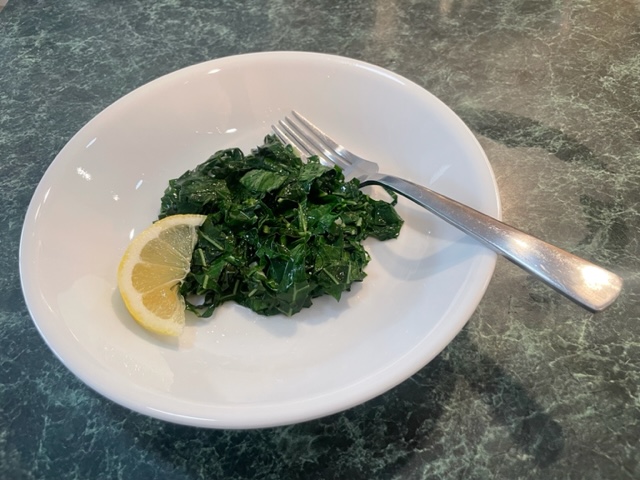
I will also share with you a simple recipe I’ve compiled after trying several from both recipe books and online that accomplishes the flavor I was introduced to years ago in southeast Georgia:
Mama Mona’s Lemony Collards
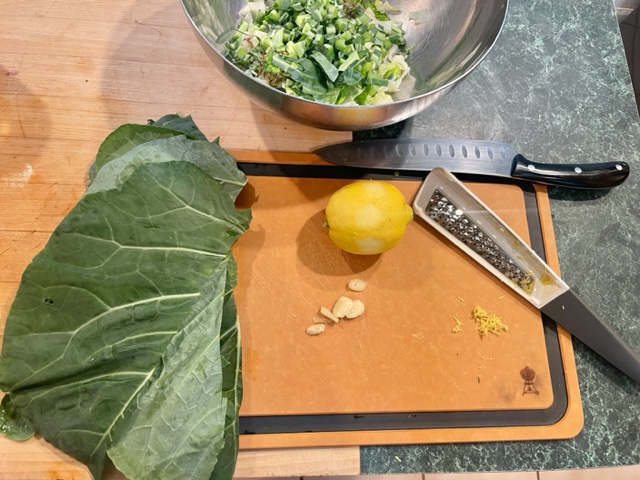
Bunch of fresh collards (5-10 big leaves)
1-2 cloves of garlic depending on your taste for it
Lemon
Butter (preferably good stuff like Kerry Gold or cultured butter)
Olive Oil
Salt and Pepper
Optional: broth, vegetable or chicken or beef
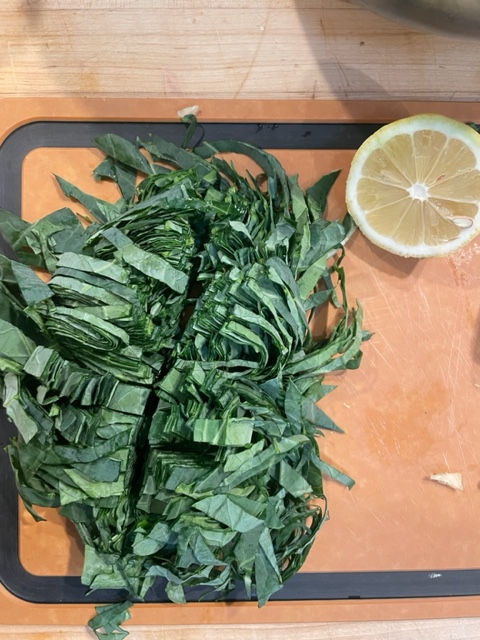
Prepare the greens by washing, drying with a towel/paper, then remove the middle ribs with a knife. After that, roll the greens tight and slice in thin strips.
Prepare garlic either by mincing or slicing and dicing into small pieces—again, up to your preference. Grate the lemon for at least 1 – 2 teaspoons of lemon zest.
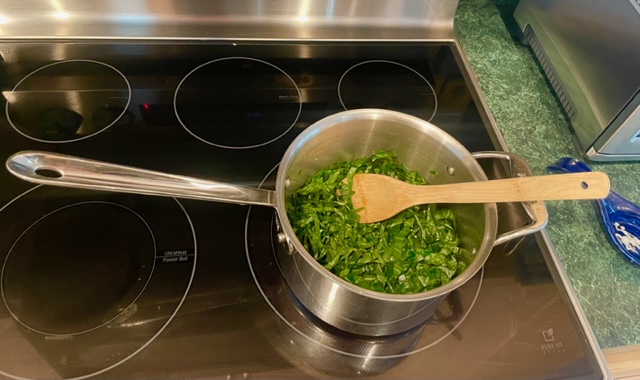
Take your favorite saucepan and put 1-2 teaspoons of butter and a drizzle of olive oil in and heat up.Once a drop of water sizzles, the pot is ready to recieve the garlic.Being careful not to burn the garlic, saute for about 1-2 minutes before adding the collard greens along with lemon zest and some salt and pepper to taste.
It usually takes about 4-7minutes to wilt the collards and you want to take it off the heat when it’s a bright green. As many recipes will advise, you want to avoid overcooking it to where the color would become a discolored green as it will emit a bitter smell and have an unpleasant taste.
Once you remove it from the heat, you can add some broth and bring back to the stovetop for a quick boil. If you skip broth then you can just squeeze fresh lemon juice on top and serve–enjoy!
The After Harvest and Feast Glow
I hope to continue sharing home garden-to-kitchen tidbits as there is nothing quite like the satisfaction one feels after toiling over supervised growth of and edible plant followed by harvesting and cooking it up in your home or sharing with others.
For those growing things in south Florida, I can report that collards are low maintenance and thrive despite surrounding weeds or insect pests. If sowing directly, consider starting the seeds in late September or October in order to enjoy eating your collard greens in late December, early January.
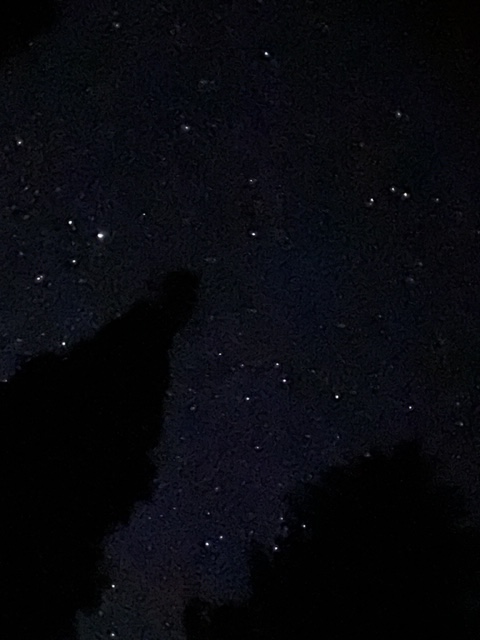
After I read it aloud, I asked my students what their reflections were and the consensus was that there was fatigue, sadness and a feeling of being overwhelmed. I asked them if they feel bored, does a change of scenery help? In the case of this poem, was science more interesting to be experienced outside rather than just reducing it to a program of numbers and theses on paper? There was no wrong answer, I simply shared this poem and asked my children what they each perceived from it.
Outdoors as a Rule
We had a good discussion about it and led to me sharing that I had always approached our “snack/break time” with the mindset that they were to get outside and experience nature through their physical senses. Over the years I’ve consistently made it a rule that they cannot play with balls, toys and other items when they go outside for the 15-30 minute outside break from our homeschool inside. While they can learn all the theories, equations and use technology as a means to learning about the sciences, I’ve been firm that they must spend a structured amount of time in nature to interact and have no agenda other than to experience or observe the outdoors in as raw a form as possible.
Teacher Teaching What She Learned
I came across Whitman’s poem during my reading of “ A New Natural Philosophy” by Ravi Scott Jain, Robbie Andreasen and Chris Hall. The book examines how educators and administrators can approach “recovering a natural science and a Christian pedagogy.
Their research and reflection helps reveal that in human history there has been recurring habit of the “poetic notions of reality” which will occur prior to scientific arguments/experiments/hypotheses. An example of their research work reveals “a theory of the multiverse and one of evolution date back to the ideas of the ancient Greeks, as does heliocenterism. The pre-Socratic thinker Anaximander suggested that men evolved from fish and also claimed an infinite number of universes were continually coming into existence and passing away. Natural scientists may talk about the multiverse, but they do well to recognize that they are participating in the very ancient discourse of natural philosophy: the love of wisdom regarding the natural world.” (13)
While “A New Natural Philosophical” is coming from a Christ-centered viewpoint, I believe that merely subscribing to an open, creative viewpoint can help the study of both science and growing technology by simply reflecting on artists like Walt Whitman.
Consider the online article by Maria Popova entitled “When I heard the Learn’d Astronomer: What Walt Whitman’s Timeless Reckoning with the Limits of Science:
“No literary artist has wrested grander themes out of the reality of the natural world, nor channeled those themes more beautifully, than Whitman, for whom astronomy was a particularly beguiling lens on humanity’s intimacy with nature. He lived through a golden age of American astronomy, when the first university observatories were being erected, when comet discoveries and eclipse observations regularly made the front pages of the nation’s newspapers. After astronomers at the U.S. Naval Observatory discovered the first moon of Mars, and soon the second, Whitman exulted in his notebook: “Mars walks the heavens lord-paramount now; all through this month I go out after supper and watch for him; sometimes getting up at midnight to take another look at his unparallel’d lustre.”’
Why Share This? Technology and Science are Constant Companions of our Children
At the writing of this, I’m a mother to an 8, 12 and 15 year old respectively, I can attest that my biggest priority over the years is to help encourage them that in the realm of the sciences there is so much to be questioned and learned.
I’ve often reminded them that even those who are scientists don’t know everything about their discipline or area of study. That’s something to be celebrated and to hopefully help inspire those students who may find particular areas of study to be interesting so that they can add their own contribution.
In the technology arena, along with my husband’s support we’ve kept them from over-indulging in things like touchscreens and easy internet searches in lieu of learning how to read, interact with others and cultivate their inner creativity so as to integrate better in a rapidly changing world as humans weave their existence with increasing tools of their own making like ChatGPT.
To be continued…after all, we’re all in “school” together on this Earth.
For the most complete information you can visit their website at www.palmbeachtpa.org From their website their function is summarized: “The Palm Beach Transportation Planning Agency (TPA) is a federally-mandated public agency that works with partners across Palm Beach County, Florida and the United States to plan, prioritize and fund the transportation system. The TPA’s mission is a safe, efficient and connected multimodal transportation system for users of all ages and abilities.”
The governing and advisory portions of it are broken up into several separate committees: The Governing Board, the Technical Advisory Committee (TAC), the Citizen’s Advisory Committee (CAC), the Vision Zero Advisory Committee (VZAC), the Transportation Disadvantaged Local Coordinating Board (LCB) and last but not least the Executive Committee Board. It’s noteworthy that both the Governing Board and the Executive Committee Board consist of locally elected officials.
All of these boards and committees have respective responsibilities that are clearly explained in the Palm Beach TPA website. You can also look through to learn who represents your region or municipality and if there are vacancies that you would consider applying for to help the TPA’s overall work.
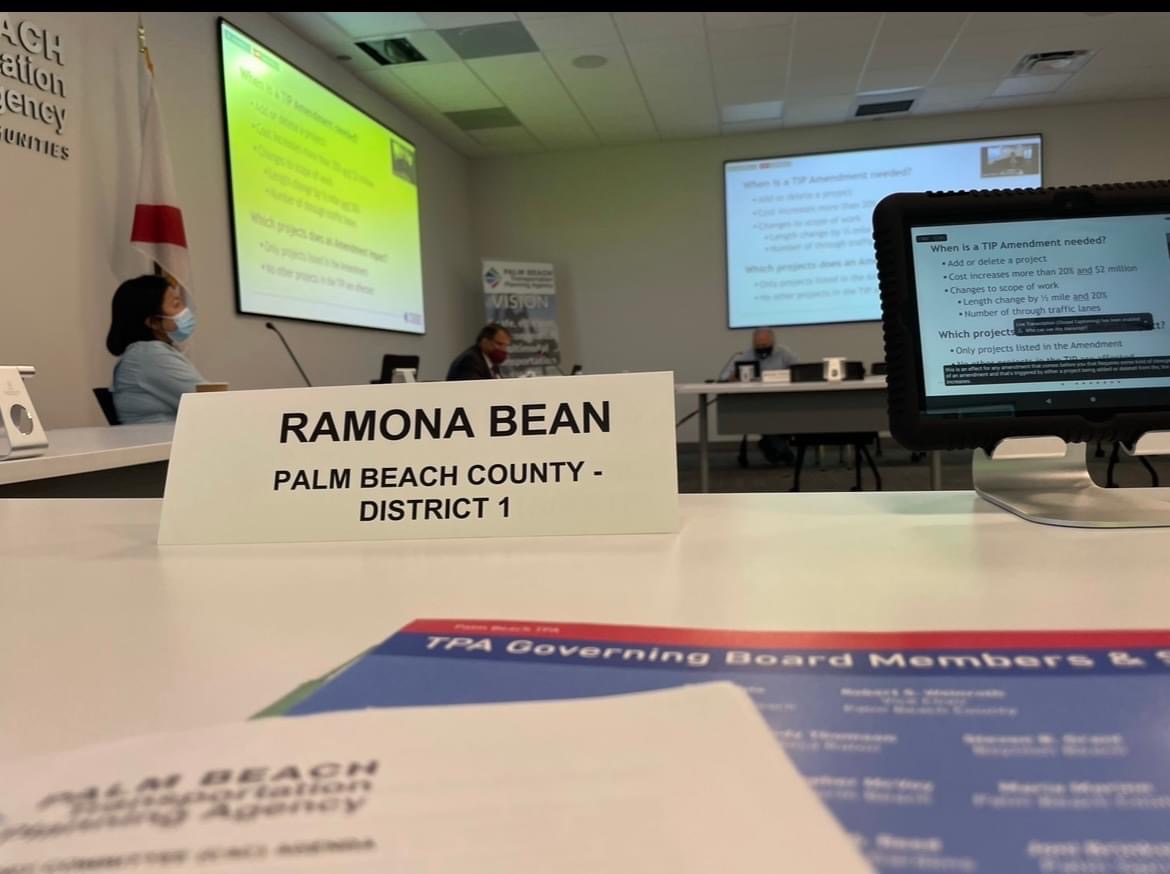
However, I’m acquainted primarily with the CAC, known as the Citizen’s Advisory Committee, as I had the honor of serving as a member representing district 1 of Palm Beach County for over 2 years.
My Palm Beach TPA Connection
It was just over a month ago that I made my resignation official serving as a member of the Citizen’s Advisory Committee (CAC) for my local Palm Beach Transportation Planning Agency here in south Florida.
A mixture of life episodes including an increased workload as a daytime educator and administrator for elementary, middle schooler and high schooler students led to my decision after serving for just over 2 years. At time of this writing, the CAC meets on Wednesdays just after lunchtime which is not conducive to most K-12 educators’ schedules. Also, I believe it’s best to give someone else the chance to serve on this committee to help keep it vibrant with new viewpoints and backgrounds.
I began my time there in spring of 2021 after being appointed by Commissioner Maria Marino of District 1 of Palm Beach County. It was a welcome assignment as I was ready to give back more to my community but not quite ready to consider running for local office as a public servant. My children were still young enough that I could manage the occasional absences from the home during the meeting times for the CAC. Yet, there were some occasions that the CAC discussion time would unravel along with the unexpected extended hours and I felt the pressure of having to decide between public service and taking care of the urgent needs such as taking kids to swim practice as CEO of the Home.
During my first meeting I was initially overwhelmed with all the numbers as they pertained to the proposed budgets and planning calendars for the various transportation projects and intermodal initiatives. I reached out immediately to close colleagues and friends who were elected officials here and beyond to ask if this would get any easier—”this” being the rapid digestion of facts and hopeful initiatives driven by the resident staff of an agency such as the Palm Beach TPA. The consensus is that, yes, while it may be a lot at first, it would become familiar and I would do well to utilize the opportunity to have the agenda reviews with staff prior to each meeting to give me the opportunity to ask questions.
I cannot say enough good things about the Palm Beach TPA staff members. They were always most informative with their meeting reminder emails and keeping in touch with us individually if we missed a meeting and being flexible to our needs as they arose. There was one time that I was concerned that our local federal representative was making ill comments about a particular transportation plan the Palm Beach TPA was involved with and I sought a meeting with the director. I was grateful to get immediate in-person meeting time and follow-up afterwards. It meant so much to me as a citizen that the TPA staff was willing to help keep the communication lines open whenever there was a question or challenge.
Intially I received the visions and initiatives for a multi-modal future in our urbanized south Florida as optimistical hopeful for the future but they clashed with the reality that I witness on a daily basis–most local citizens are not ready to use public transportation frequently as is currently proposed as one of the solutions to traffic congestion in our county. Also, I would be disingenuous if I didn’t mention that there were countless times when some of my fellow committee members found themselves (myself included) devolving into lines of questions, irratic thoughts spoken aloud and rigorous discussions that wouldn’t necessarily help the process but took up hours of a meeting. Of course, that’s sometimes the messy part of helping generate the public discourse needed to learn what direction to advise the decision-makers to consider when budget allocations or tranportation plans are on the chopping block.
However, despite some sobering revelations over the last couple of years I found that this particular committee was fruitful as a part of the vetting process for public opinion for the Palm Beach TPA and the governing board members to sift through—especially when it came to the relevance and necessity for certain projects to receive federal funding for specific localities. For instance, as I drive on interstate I-95 in north county today I’m seeing the roadway construction projects underway that I once read about in a meeting report at an earlier CAC meeting.
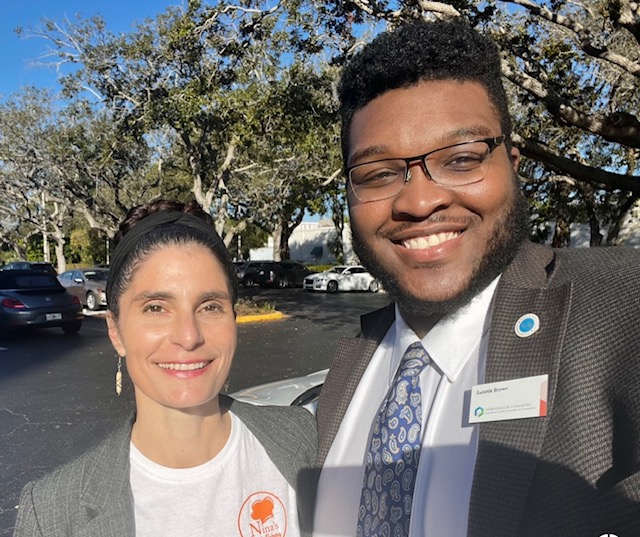
Again, being on the CAC was a great opportunity to share the concerns of my area in a public forum and serve alongside with colleagues and friends like Sammie Brown of Riveria Beach (pictured below) and fellow Palm Beach Gardens resident James Garvin. Linda Hess now represents district 1 and I’m confident she will represent everyone to the best of her ability. Thanks to everyone giving their time on CAC and the other Palm Beach TPA committees and boards.
How Can Palm Beach County Residents Interact with Palm Beach TPA?
As one navigates the website, you’ll find there are several ways to interact with the Palm Beach Transportation Planning Agency. Among them, but not limited to, are the following that you may find of interest to click on right away:
Attend meetings open to the public in person or online via ZOOM. You may remain passive or contribute your opinion in the “public comments” section or portion of the meeting: https://palmbeachtpa.org/how-to-attend-a-meeting/
There are multiple public comment/surveys conducted during a given calendar year depending on what the Palm Beach TPA is sorting through. For example, there has been talk of changing the format of Okeechobee Boulevard and although we have some 1.5 million (and counting) residents in Palm Beach County, we only heard from dozens instead of at least thousands of people. Currently, the long range “Vision 2050 Transportation Survey” is open for you to participate: https://survey123.arcgis.com/share/834b7f353c294cf3831ae66e904b88e2
Information on regional transportation planning meetings or conferences that the public can attend or view.
Suggestions on how to participate in specialty transportation themes like Florida Bicycle Month which is celebrated in March: https://palmbeachtpa.org/events/
If you are a Palm Beach County resident then I don’t need to share with you how traffic patterns and modes of transportation affect you on a daily basis. While we can all complain and battle constant inner road rage about the congestion and high speeders, this is an agency built to recieve information from the public if only they would participate through the above avenues.
Please consider learning more about the Palm Beach Transportation Planning Agency and consider sharing your opinion at least once a year to help this agency function with a better knowledge of what our citizenry wants and needs in relation to transportation in PBC.
R.V.S.B.
Note: Additional thanks to Valerie Nelson, current Executive Director of the Palm Beach TPA, who received countless questions from me over the years and is doing a great job representing the agency.
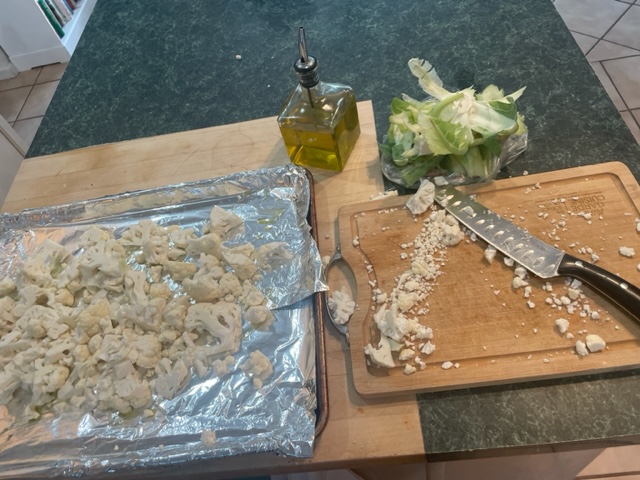
In the past couple of years, I’ve been learning how to incorporate more vegetables into our Bean household by simply roasting them in the oven. My sources of inspiration include aunts and uncles as well as your standard internet search.
As part of my “CEO of the Home” status, I’d like to share a simple combination of ingredients that I’ve curated which you can calibrate to your desired outcome to help diversify your veggies palate in a short amount of time for dinners at home.
The following recipe can be applied to cauliflower, broccoli, potatoes (including sweet), summer squash and zucchini. That’s not to say you can’t try it with other vegetables but I can only account for testing the aforementioned ones.
I like to use a large cookie sheet pan and line it with foil for the roasting and subsequent clean up. The amount of vegetables can vary and you can adjust the additions as necessary or desired to taste.
Ramona’s Roasted Veggie Blend
Fresh vegetables cut up in about 1-inch pieces (adjust as desired)
Olive Oil (you may prefer to use other oils or butter, just consider heat tolerance)
Salt and pepper
*optional- dried herbs such as rosemary, oregano, thyme etc based on taste
Preheat the oven to 425 degrees- as you wait, distribute the vegetables into a single layer on your baking sheet and toss with olive oil. Sprinkle salt and pepper as desired. Do the same if you are adding any herbs.
Once oven temperature is ready, put them in and start timer for 15 – 20 minutes. Some vegetables will roast faster than others. I usually check around 15 minutes and use a large spatula to flip the vegetable pieces over to help cook each side as much as possible. The overall cook time will vary and you’ll learn how much longer you need to cook the respective vegetables as you go.
With cauliflower, I’ve found it will start to smell pretty strong until it begins to caramelize with golden and dark marks on the fringes. Broccoli will be roasted pretty well when it’s getting black singes.
With potatoes, I usually do a taste test to make sure their ready- they’ll have that characteristical roast potato look, crispy skin on the outside and savory tender insides. I’ve even mixed both regular and sweet potato pieces in the same sheet and found it to work well and have a sweet and savory magnetism for the taste buds.
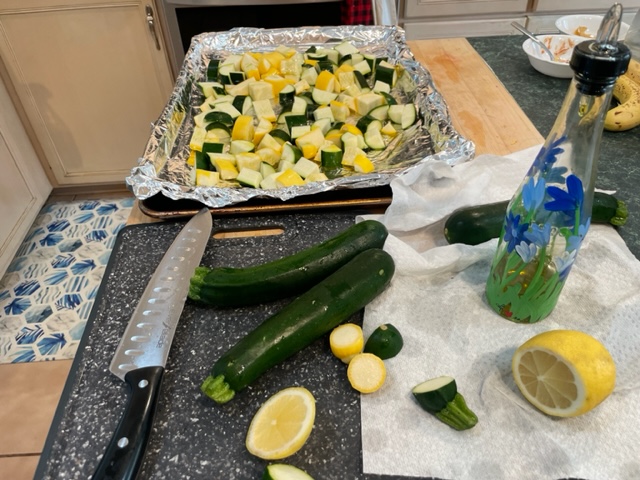
Tonight I fed the family a mix of cut up zucchini and yellow squash and tossed them with the olive oil, greek seasoning mix including some dried oregano and parsley. For extra garnish, I offered shaved parmesan cheese at the table with it.
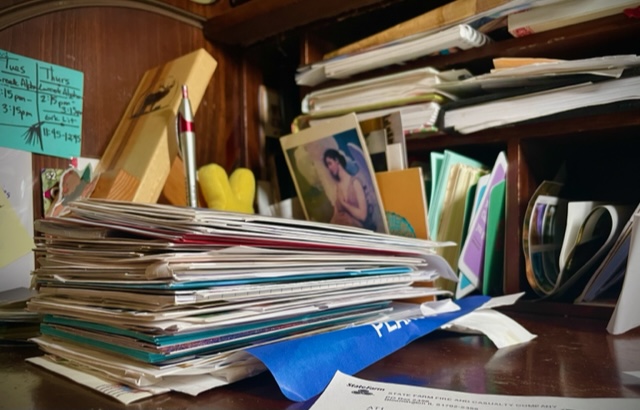
It’s a beautiful Monday morning here in south Florida, first day of the new year and already I feel behind at the sight of my writing desk. The reason? Both unanswered and embarrassingly, in some cases, unopened holiday cards and letters that have been sent to our household in the past several weeks.
They began to slowly appear the week after Thanksgiving. That should have been my sign to organize myself and make sure to upload some family photos at my local photo goods shop or even try the online services like Snapfish.
Instead, I bought a couple of boxes of Christmas cards as an afterthought one day, pledging mentally that I would just answer each card greeting with a handwritten response as it came to our home as a personal touch. The weeks sped on into December, no responses sent.
There was a lull in mail activity in the second week of December followed by an onslaught of postcards and decorative envelopes. The week of Christmas itself had a sloshing sort of mail arrival volume on a daily basis making me dizzy at the thought of how many folks seemed to have it together for the holidays and yet I hadn’t been able to really write down one word cohesively in a Christmas or holiday greeting card.
Perhaps this is the part in the story that I should have made my way to our CVS Pharmacy store and sat myself down at the photo kiosk to put together a simple greeting card and prepare to seal and stamp countless cards the very next day before we left town for a family Christmas getaway.
Again, I deviated from a logical and less stressful course and instead bought a few boxes of “Happy New Year” cards—my caustic mind thought that these overachieving acquaintances and friends were just going to have to accept a belated personal response wishing them well for 2024.
For those reading who know me personally, please forgive me that you may actually receive one of these aforementioned “Happy New Year” cards this very week prior to the feast of Epiphany. Further, please truly forgive me if you never do.
The oddest part about this present holiday writing behavior of mine is that if you do know me, I’m verbose during the rest of the year in the snail mail department. I keep track of my letters and care packages on a weekly basis and I average at least 8 – 10 items each week throughout the year—excluding the deployment of postcards to family and friends when I travel on road trips or work my summers in Wyoming.
The Christmas Past
Let me dial back a bit to explain for proper context and some revelation for why I’m sarcastic and a little bitter about this ritual of photo card and letter swapping for the holidays.
It used to be I always sent out a photo card of sorts and printed letter (sometimes hand-written for certain chosen recipients). In 2000 I got married and kept subscribing to this holiday correspondence for nearly two decades.
Sometime before the COVID-19 pandemic date marker of 2020, life for our household had become hectic with the understandable challenges of raising three children, living in a multi-generational home, and sustaining recent death in home hospice care of a beloved elderly family member, Grandma Marjorie Bean, who had lived with us and weathered years of dementia prior to her departure. Additionally, I went back to school with the start of my MBA degree at University of Florida.
Basically, something had to give out with the mounting responsibilities here at home and so the stress and mess of getting a holiday card/letter greeting out to family, friends and co-workers took the proverbial “kick to the curb”.
The other factor I believe is indifference and a sense of redundancy that has overcome me in recent years.
At least for those family members and friends who were on my social media outlets—in my personal case, primarily Facebook—I had noticed that most everyone was sharing photos and updates on their family lives throughout the year. In our case, we do not post our children’s photos online if we can help it as our choice until they are at age of consent for themselves.
Still, by the time the holiday season came around post-Thanksgiving, I felt we’d already been kept posted on the lives of others and so didn’t feel the urgency to know how people were doing or to go through the trouble of updating everyone.
My holiday mail correspondence became one of a short list of must-send-outs with personal handwritten greetings and then responding to anyone else’s mail that came in with another personalized response. Care packages continued as in years prior but now I didn’t toss in a mass copied photo card, I would print out individual photos and stick them into cards to those who hadn’t seen us all year.
Fast-forward to now and 2023 brought us another passing of a family member in our home during late September. The patriarch of our family, Dr. William J. Bean, had a slow decline in health with months of hospice care at the house before passing at the age of 97.
By the time the end of the year had come, my ability to write had become nearly obsolete by my standards because of pure fatigue. Hardly any cards left this house for the holiday season, even some care packages to family and friends lacked them.
The Christmas Future
So why do people still send them? Why don’t I?
These two questions have been cycling in my mind for weeks now and came to a chaotic and heartbreaking crescendo last week.
A few days after Christmas day I was informed of tragic news while working in the house with family members cleaning and decluttering in preparation for the upcoming new year.
It was the type of news that shatters the normal clattering of life on a random weekday afternoon and pierces your spirit in the ethereal gut at the realization that someone you know left this Earthen plane much too soon.
After reviewing and putting my phone away, I stumbled over to sit at my writing desk to digest the news. My mind whirled to clearly remember the last time I spoke with her a few weeks ago and had the vague recollection that I had received something from her in the mail. My hands fumbled through the paper stack mess on my desk to find her Christmas card. I found it within seconds and just looked at it as if it were for the first time.
Simple greetings were in the text with a cursive font appropriate for the season and a collage of beautiful photos of their family. Pure bliss in all their eyes, photos picked just for this occasion to share with family and friends their joy in life and although so busy with all the things that a growing family has going on—her photo card was a way of saying something like, “hey, we’re super busy with wonderful things as you can see, but we care about you and hope you have a beautiful holiday season-xoxo”.
My eyes welled up to the blurriest degree as I pinned up her card on the wall next to my writing desk where I keep a running list of prayer petitions. Her loved ones were now left with countless photos like these in her sudden absence. May her memory be eternal.+
In the days since, I’ve been going around my home and rummaging through my vehicle to locate every last holiday card and letter. At the same time, I’ve been mentally drafting what I should or could write in a short amount of time to make up for another lost holiday correspondence effort this past season.
More effectively, regardless of who I’m able to reach in the next couple of weeks, I’m making a resolution to attempt in 2024 the Christmas et al list to share with those who still enjoy sharing their lives with us in this way. Just about 11 months to go at this rate for planning purposes right?
I guess I had become a “scrooge” of sorts in this realm of recent traditions, but after some revelations in the past few years including last week’s news, I admit that there is a net positive to engaging with others this way—especially when life’s circumstances or distances far apart keep us from seeing loved ones as often as we’d like while we’re here.






 CEO of the Home